
Borghese Gallery: Booking, Hours and Bernini’s Best Works
Borghese Gallery: Booking, Hours and Bernini’s Best Works
Contenidos de esta página sobre Roma
- Guided tour of the Borghese Gallery
- History of the Borghese Gallery
- What to see at the Borghese Gallery
- The works you shouldn't miss
- Bernini's sculptures
- The Caravaggios in the collection
- The pinacoteca: second floor
- The booking system: what you need to know
- Tips for visiting the Borghese Gallery
- Villa Borghese: much more than a park
- 2026 prices
- Guided tour of the Borghese Gallery
- Opening hours
- Address
- Getting there
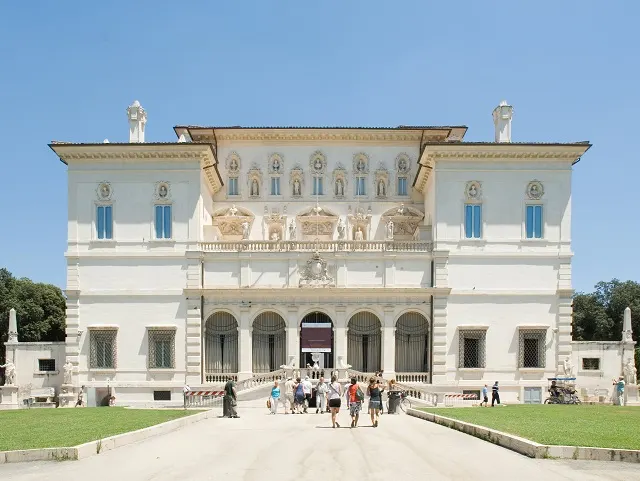
If you love culture at its very best, the Borghese Gallery is one of the museums in Rome you should see on your visit to the city. You'll find a collection by the greatest Italian masters, and you can stroll through Villa Borghese, Rome's main park and home to this prestigious museum.
History of the Borghese Gallery
This museum's story begins in the 17th century with a man of very demanding taste: Cardinal Scipione Borghese, nephew of Pope Paul V. Scipione was an obsessive collector. He paid fortunes for the finest works of his day, but he also used his influence to obtain them in less orthodox ways.
The best-known example is Caravaggio. When the painter killed a man in 1606 and fled Rome, Scipione seized the chance to confiscate several of his works. That's how six Caravaggio paintings ended up in the Borghese collection, making the museum one of the best places in the world to see his work.
The villa was built between 1613 and 1616 as a pleasure «casino», in other words a summer residence and showroom designed to impress his guests. Later, in 1902, the Borghese family sold the collection to the Italian state, which opened it to the public.
What to see at the Borghese Gallery
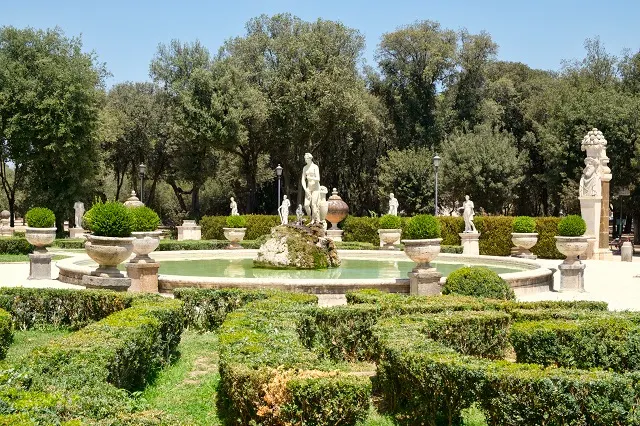
The handsome building that houses it, called Villa Borghese Pinciana, sits inside the gardens of Villa Borghese, a public park in Rome (80 hectares) with lovely Italian-style gardens, several fountains, museums and attractions such as bike or pedal-cart rentals to get around it.
Its pinacoteca, or painting gallery, is probably the richest in Italy, with works by Caravaggio, Titian, Rubens, Raphael, Bernini and Sanzio, among others. If you're passionate about private art collections in Rome, it's also worth visiting the Doria Pamphilj Palace gallery, a noble mansion in the center that holds paintings by Velázquez and Caravaggio.
The building isn't very large. In fact, only 360 people are allowed inside the museum at any one time. For that reason, we recommend booking ahead to visit the Borghese Gallery. Enjoy your ticket to the Borghese Gallery with fast-track access and a guaranteed reservation.
The works you shouldn't miss
The museum is split over two floors: the ground floor with the sculpture collection and the upper floor with the pinacoteca. Each floor has its own gems. Here's a rundown of the most important ones.
Bernini's sculptures
Gian Lorenzo Bernini is the star of the ground floor. Four of his sculptures alone justify a visit to the museum. He made them very young, between the ages of 20 and 25, and they're still considered the finest sculptures of the Baroque.
- Apollo and Daphne (1622-1625): the museum's most famous sculpture. It captures the exact moment the nymph Daphne turns into a laurel tree to escape Apollo. The marble looks like real skin, real leaves, real wind. It's hard to believe it's stone.
- The Rape of Proserpina (1621-1622): it shows Pluto carrying Proserpina off to the underworld. Look at Pluto's fingers sinking into her thigh and you won't believe it's marble. It's one of the greatest technical achievements in the history of art.
- David (1623-1624): unlike Michelangelo's David, this one isn't at rest. He's mid-action, sling taut, face full of concentration. Bernini is said to have used his own face as the model.
- Aeneas, Anchises and Ascanius (1618-1619): a sculptural group spanning three generations, made when Bernini was only 20. His father Pietro also worked on part of it.
The Caravaggios in the collection
The Borghese Gallery holds six Caravaggio paintings, the largest concentration of his work in a single private space. They're brutally dramatic pictures: light emerging from darkness, faces with real expressions, violent scenes handled with an honesty that scandalized his contemporaries.
- Saint Jerome Writing (1605-1606): an old man bent over a book, lit by an almost theatrical light. Painted just before Caravaggio fled Rome.
- Madonna dei Palafrenieri (1605-1606): the Virgin, the Christ Child and Saint Anne crushing a serpent. The Church rejected the painting on the grounds that Mary and the child were too human, too ordinary. Scipione bought it immediately.
- David with the Head of Goliath (1609-1610): one of the most striking works here. David holds Goliath's severed head, and that decapitated face is a self-portrait of Caravaggio himself. Some historians believe it was a symbolic gift to Cardinal Scipione, a plea for papal pardon.
The pinacoteca: second floor
The upper floor is the pinacoteca, where you'll find panels by the great masters of the Renaissance and the Baroque. There are three pieces here you shouldn't miss:
- Raphael's Lady with a Unicorn (c. 1506): a serene, mysterious female portrait. The young woman's identity has never been confirmed. Beneath the paint, X-ray analysis revealed she was originally holding a dog, not a unicorn.
- Titian's Sacred and Profane Love (1514): one of the most debated paintings of the Renaissance. It shows two women, one clothed and one nude, beside a sarcophagus. Which is sacred love and which profane? Experts still can't agree.
- Canova's Pauline Bonaparte as Venus Victrix (1805-1808): Napoleon didn't want anyone to see it. Pauline, on the other hand, showed it off proudly. It's one of the most sensual Neoclassical works in existence.
The booking system: what you need to know
The Borghese Gallery has a rule no other museum in Rome has: only 360 people are allowed inside at the same time, and visits are divided into 2-hour slots. When your time is up, you have to leave. No exceptions.
There's an upside and a downside to this. The downside: you have to book weeks or even months ahead, especially in high season (April to October). The upside: it's never crowded. You can get close to Bernini's sculptures and study them without being jostled. That's something you simply can't do at the Vatican Museums.
When should you book? If you're traveling in summer, book at least 4-6 weeks ahead. In low season (November to February), 1-2 weeks is usually enough. Weekends sell out before weekdays.
You can buy your reserved Borghese Gallery ticket with audio guide and get more flexibility with dates. You can also get into the Borghese Museum for free with the Roma Pass sightseeing pass from Go City.
Tips for visiting the Borghese Gallery
- Arrive 15 minutes before your slot. Entry closes on the dot. If you're late, you can lose your ticket.
- Audio guides are available in English. They're well worth it, especially for the Bernini sculptures. They give you the historical context of each piece in just a few minutes.
- You must leave all bags, purses, cameras, video cameras and umbrellas in the museum cloakroom. Go with the bare minimum.
- Photos and videos are strictly forbidden. No phone, no camera. Enjoy it with your eyes.
- Two hours are enough if you know what you want to see. If you go without a guide and without preparation, the time can feel short for taking it all in. We recommend reading up on the main works before your visit.
- After your visit, take a walk through Villa Borghese. The park is huge and very pretty. You can rent a bike, sit beside the artificial lake or head to the Pincio terrace for a view over Rome from above.
Right next to this museum, in the gardens of Villa Borghese, you'll also find the National Gallery of Modern Art.
Villa Borghese: much more than a park
Villa Borghese is Rome's green lung. At 80 hectares, it's the third largest green space in the city. But it isn't just a park for strolling: it has three museums, a zoo, a lake with rowboats for rent, an amphitheater, and several terraces with panoramic views.
The Pincio Terrace is one of the most visited spots. From up there you can see all of Rome: the Vatican, Castel Sant'Angelo, the Pantheon, the bell towers of the churches in the historic center. It's especially lovely at sunset.
If you're traveling with kids, the park has playgrounds, pedal carts shaped like cars and a little toy train. It's a good way to combine culture and downtime in the same day.
2026 prices
Standard ticket: €15. Ages 18 to 25: €4. Under 18s and over 65s: €2.
On top of that there's the mandatory €2 booking fee per person, which everyone pays. Without a reservation you won't get in, even if there are spots available on the day.
On the first Sunday of each month, admission to many Italian museums is free. However, the Borghese Gallery does not take part in the Ministry of Culture's free days because it's a private foundation. The booking fee always applies. If you want to make the most of those days at other sites, take a look at our guide to free-entry museums in Rome.
Opening hours
Tuesday to Sunday, from 8:30 a.m. to 7:30 p.m.
Closed Mondays, January 1 and December 25.
Address
Piazzale del Museo Borghese, 5
00197 ROMA
Getting there
Metro: Line A, «Piazza di Spagna» stop (follow the signs: Villa Borghese – Via Veneto)
Buses: no. 5, 19, 52, 53, 63, 86, 88, 92, 95, 116, 204, 217, 231, 360, 490, 491, 495, 630, 910, 926
On foot from the center: from the Trevi Fountain it's about a 25-minute walk north. It's a pleasant stroll through the Trevi district and up Via Veneto. From the Spanish Steps (Metro Line A) it's only 10 to 15 minutes on foot, climbing the Pincio hill.