
Villa Borghese: Rome’s Great Park and How to Enjoy It
Villa Borghese: Rome’s Great Park and How to Enjoy It
Contenidos de esta página sobre Roma
- Rome by night tour in small groups
- Rome's most important park
- What to see in Villa Borghese
- Rent a rowboat
- Grab a bike
- Take a look at the water clock
- The Pincio terrace, the best views in Rome
- Bioparco
- The statues of Villa Borghese
- The fountains of Villa Borghese
- The Borghese Gallery, Villa Borghese's museum
- Guided tour of the Villa Borghese Gallery
- Getting there
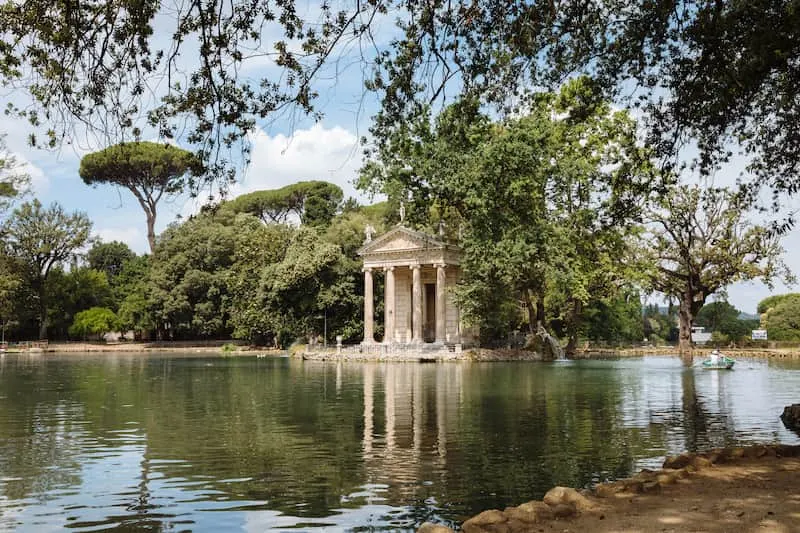
In the heart of Rome you'll find one of the most beautiful and expansive urban parks in all of Europe: Villa Borghese. As you stroll through this Roman park, you'll come across Italian-style gardens and English-style buildings, along with ponds and fountains straight out of a film, plus the famous Borghese Gallery.
Villa Borghese deserves a spot on your list of things to see in Rome.
Rome's most important park
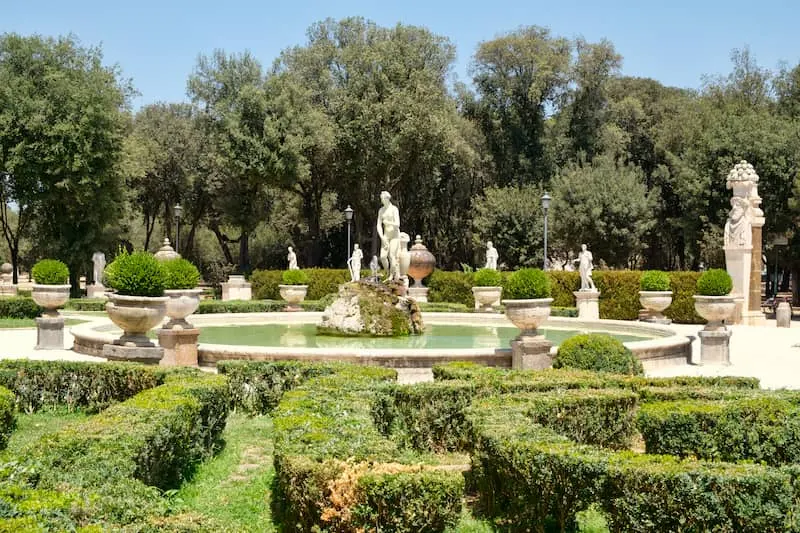
Villa Borghese is the perfect place to breathe some fresh air, enjoy a natural setting right in the center of Rome and rest up after pounding the pavement with your Roma Pass. It's also a major artistic hub, with hundreds upon hundreds of stories packed into its 80 hectares.
The park you see today was bought by the state from the Borghese family in 1901 and opened to the public in 1903, though it's worth noting that the first references to this spot go back to the days of the ancient Roman Empire, when it was known as the Gardens of Lucullus.
What to see in Villa Borghese
There are plenty of things to do in Villa Borghese. It's also one of the most spectacular free places in Rome to visit.
Rent a rowboat
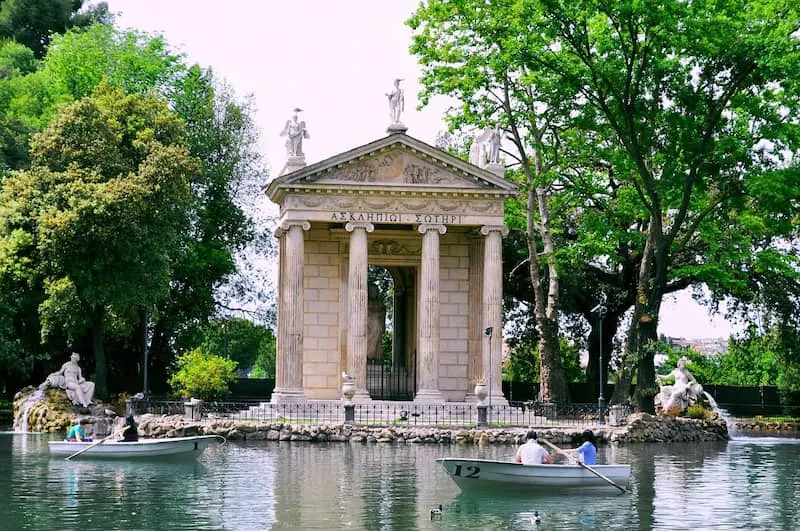
In the lake garden you can rent a boat for a lovely experience, especially if you're visiting Rome with kids or as a couple.
The beautiful lake is ringed by leafy trees, and from the water you can admire the Temple of Asclepius, the Roman god of medicine and healing. To enjoy a spot of rowing you'll pay €4 per adult and €2 per child.
Grab a bike
Renting a bike is a great way to cover the park's 80 hectares. Villa Borghese has nine entrances, but the main ones are Porta Pinciana (the Spanish Steps (Piazza di Spagna)), the Vinicio ramp (Piazza del Popolo) and the monumental entrance (Piazza Flaminio).
You can rent a bike at any of these entrances. You can also book a guided bike tour of Villa Borghese.
Take a look at the water clock
In 1867 the inventor and professor Giovan Battista built this wonderful Victorian-style contraption, which he called a «hydrochronometer». Water filling and emptying the device provides the driving force behind the timekeeping mechanism.
The water clock sits in the middle of a pond in the villa's gardens.
The Pincio terrace, the best views in Rome
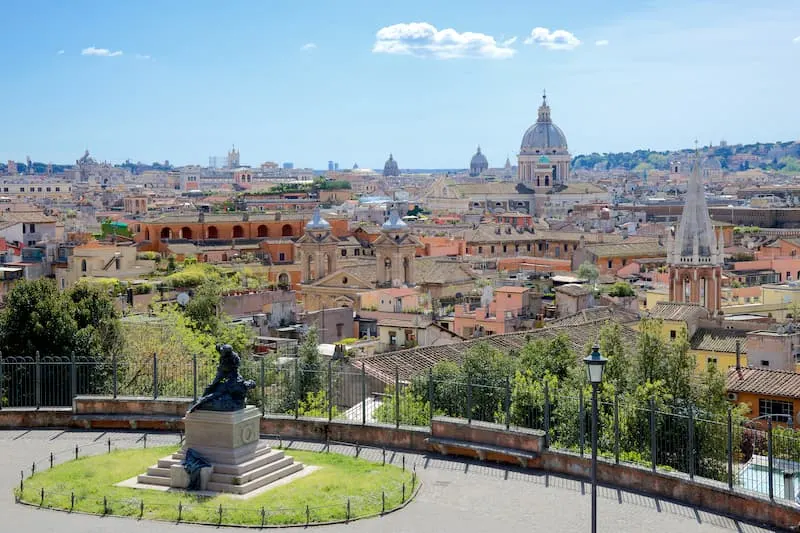
Villa Borghese park spreads across the Pincian Hill, one of the most famous hills since ancient Roman times. That's why from the Pincio terrace you can take in one of the most beautiful and spectacular views in the whole city.
Piazza del Popolo, St. Peter's Basilica and a thousand other sights will stay with you long after you leave.
Bioparco
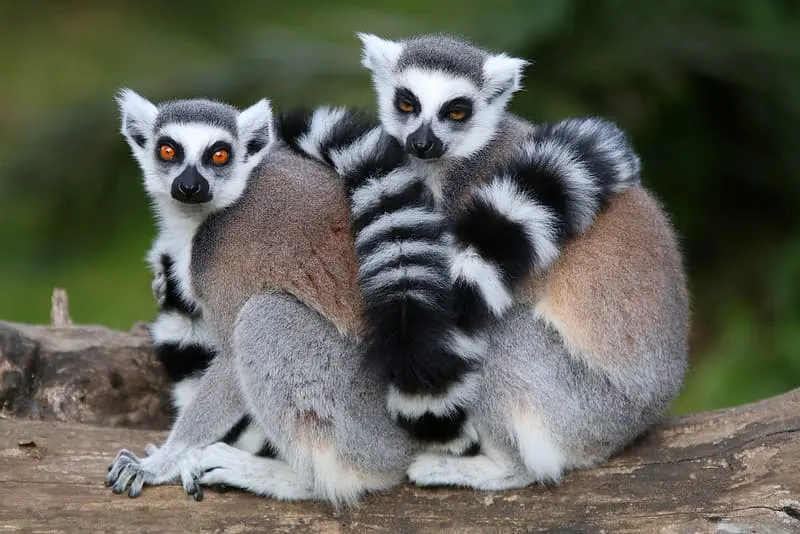
Bioparco is one of the oldest zoos, and one of the loveliest and most innovative, in all of Europe. Instead of the usual cages to display the animals, the designers took advantage of the garden setting to give visitors the feeling that the animals are roaming free.
You can buy your Bioparco tickets here.
The statues of Villa Borghese
On your visit to this Roman park you'll find plenty of statues that have earned their place in the art world. Among them, look out for these striking statues in Villa Borghese:
- The statue of Lord Byron (an exact replica of the one at Trinity College, Cambridge).
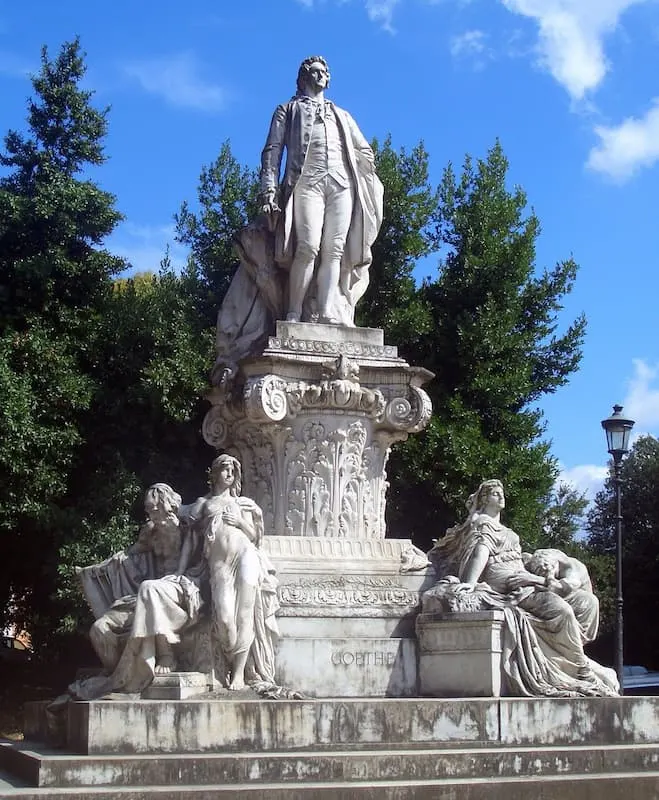
- The statue of Wolfgang Goethe (a gift from Kaiser Wilhelm II of Germany to the city of Rome).
- The statue of Aleksandr Pushkin (the famous Russian poet and playwright whose work brimmed with love for Italy, even though he never managed to visit the country).
The fountains of Villa Borghese
You'll find all kinds, from every influence and style. Some of the standouts are the Fountain of the Sea Horses (designed by the painter Cristoforo Unterberger in 1791 and sculpted by Vincenzo Pacetti) and the Fountain of the Dolphins (one of the most popular, on Viale David Lubin)
The Fountain of Venus is also worth seeking out (on Piazza Scipione Borghese, the figure is completely nude and is a copy of the Venus de' Medici).
As we said at the start, there's a lot to see when you visit Villa Borghese. Don't miss Piazza di Siena, Villa Medici, Casina Valadier, the Casina di Raffaello, the Globe Theatre or the Casa del Cinema. They're all beautiful spots with plenty of history behind them, but we've saved the best for last.
The Borghese Gallery, Villa Borghese's museum
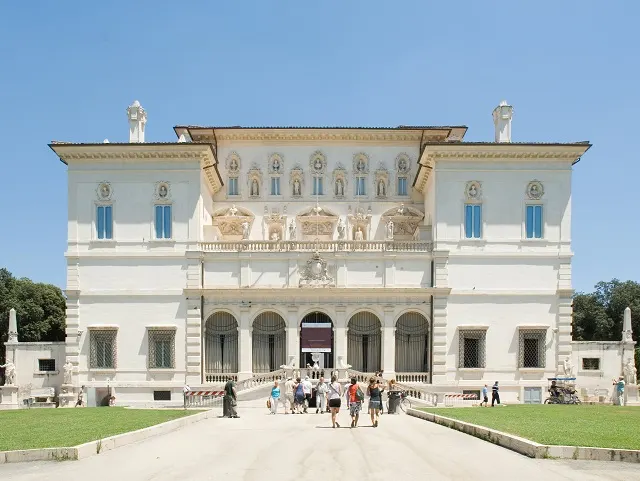
This is the crown jewel of your visit to the park. So much so that we've devoted a whole page to it. It's one of the best museums you can visit while you're in Rome.
In fact, to visit the Borghese Gallery you need to book your ticket well in advance. If you'd rather keep things simple, we recommend buying your Borghese Gallery ticket.
Besides the Borghese Gallery, there are other museums in Rome close to the park that are well worth a look, such as the National Gallery of Modern Art and Villa Giulia, Rome's National Etruscan Museum.
As you can see, Villa Borghese is a place you shouldn't miss, even if you're seeing Rome in just three days. If you're looking to stay a few minutes from the park, take a look at the hotels on Via Veneto, Rome's most glamorous street, right on the edge of Villa Borghese.
Getting there
- Metro: Spagna or Flaminio station (Line A)
- Bus: lines 49, 88, 95, 490, 495.