
Jewish Ghetto Rome: What to See and How to Get There
Jewish Ghetto Rome: What to See and How to Get There
Contenidos de esta página sobre Roma
- A brief history
- Where to stay in Rome's Jewish quarter
- What to see in Rome's Jewish Quarter
- The Great Synagogue
- Portico of Octavia
- Theater of Marcellus
- Turtle Fountain
- Largo di Torre Argentina
- Where to eat in Rome's Jewish Quarter
- Sora Margherita
- Pasticceria Boccione
- Giggetto
- Nonna Betta
- Piperno
- How to get there
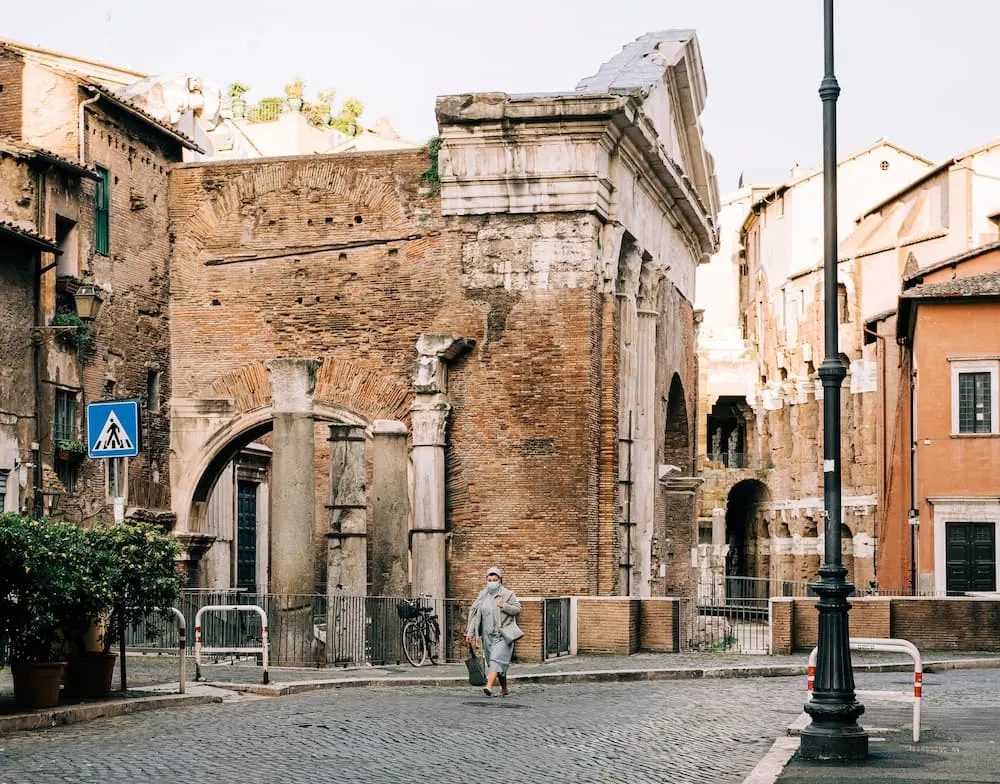
Rome's Jewish quarter is one of the most intriguing corners of the Italian capital. It sits right in the center, and though it's small, its narrow streets are packed with details that bring Jewish history back to life. It's easily one of the areas of Rome worth exploring on foot.
A brief history
Rome's Jewish community is considered the oldest in Europe. It dates back to the 2nd century BC, and for centuries its members lived in Trastevere. Then, in 1555, Pope Paul IV revoked the rights of Roman Jews and confined them to the other side of the Tiber.
That's how Rome's ghetto came about, with Jewish families living among tiny streets running from the church of Santa Maria del Pianto to the ruins of the Portico of Octavia.
The ghetto was cleared and reoccupied several times until 1870, when it was demolished to make way for new streets. Many Jewish residents chose to stay, and although very little of the original quarter survives, a walk through Rome's Jewish quarter is essential today if you want to understand the story.
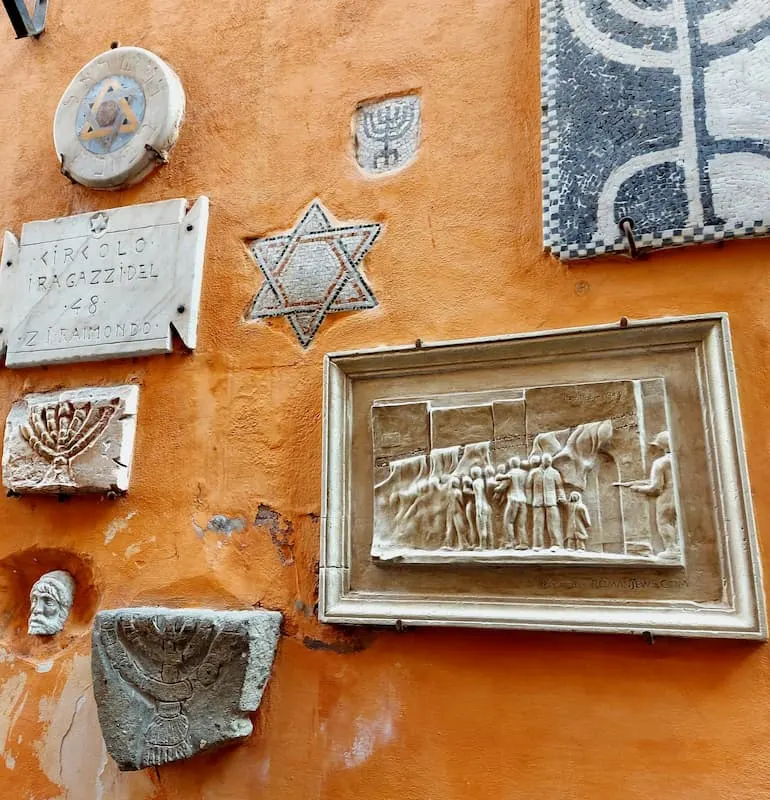
While the ruins of the Roman Forum tell the story of ancient Roman civilization, places like the Jewish quarter hold just as much insight into how the city has lived.
If you're looking for somewhere to stay in Rome, this is also a very central area with plenty of accommodation options.
Where to stay in Rome's Jewish quarter
With so many sights all around and a superb location, staying in Rome's Jewish quarter is a great idea.
| 📍Best area to stay in the Jewish Quarter | Near the Turtle Fountain |
| 🏩 Price range | Mid-range |
| ⭐ A 4-star hotel | HT6 Hotel Roma |
| 👑 A charming hotel | NEMAN Maison Experience I Pantheon |
| 💰 A budget hotel | Giubbonari Street |
| 💎 Average price of a 4-star hotel in Rome | €238 |
| 💶 Mid-range hotel prices | €127 |
| 💲 Budget hotel prices | €96 |
What to see in Rome's Jewish Quarter
Since this is one of the most eye-catching neighborhoods in Rome, we recommend discovering it on this guided tour. But if you'd rather go on your own, don't miss these places:
The Great Synagogue
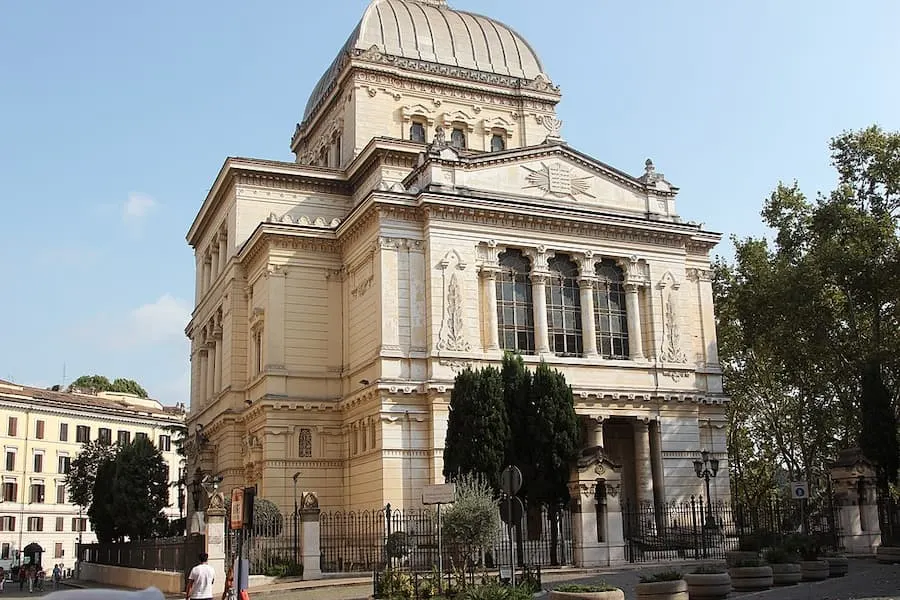
This is one of the most important landmarks to see in Rome's Jewish quarter. Built in 1901, it's known as the Great Temple.
Beyond its two floors and large dome, the basement houses the Jewish Museum and the Spanish Temple, another synagogue, smaller in size.
Portico of Octavia
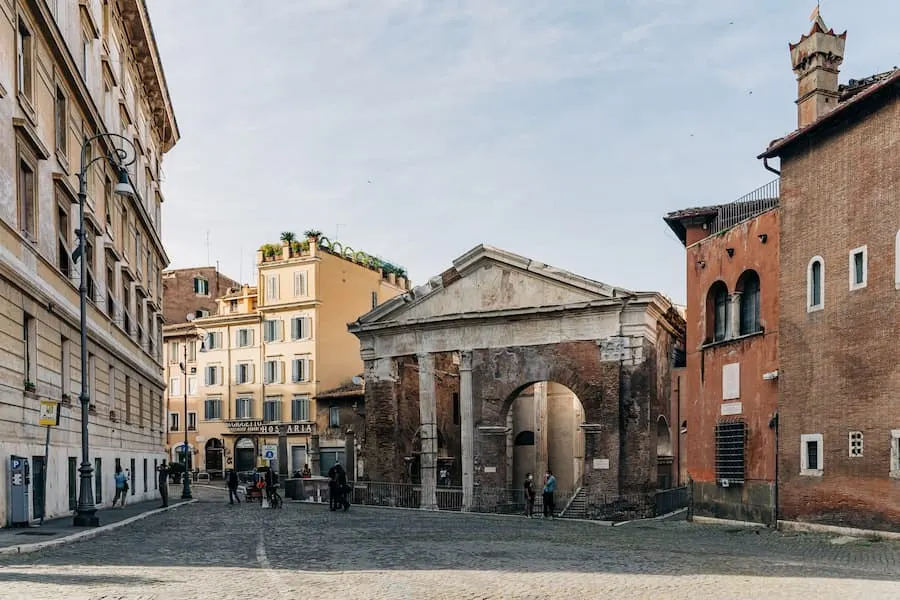
This is the only surviving portico of those that once bordered the ghetto. It was built between 27 and 23 BC by the emperor Augustus in honor of his sister Octavia.
Inside there was a library, a school and two temples dedicated to Jupiter and Juno. Later it became the site of the city's fish market.
Theater of Marcellus
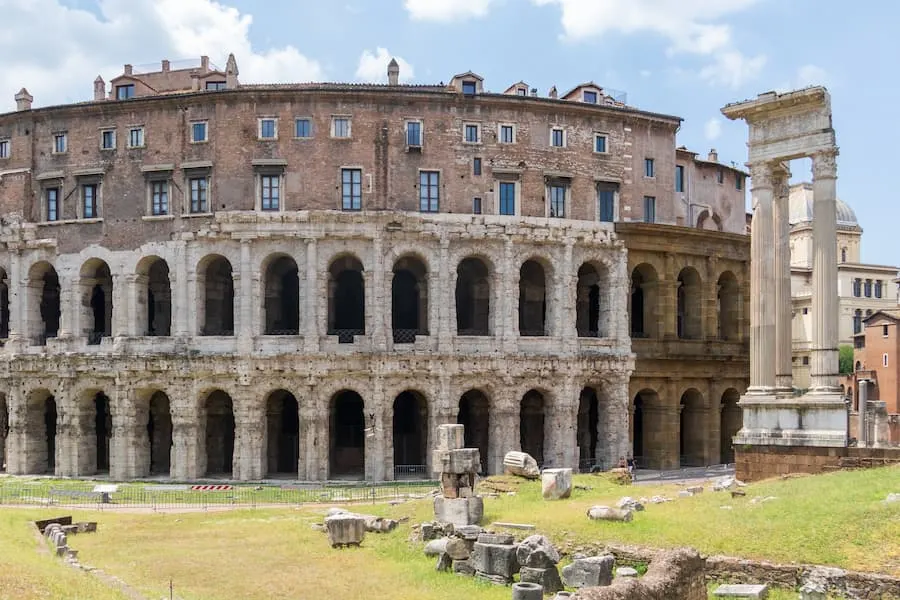
People call it the Colosseum's little brother because the resemblance is striking. In fact it was built 83 years earlier, ordered by Julius Caesar and completed under Augustus.
It held up to 20,000 spectators; it became a fortress in the Middle Ages and later a royal palace.
Turtle Fountain
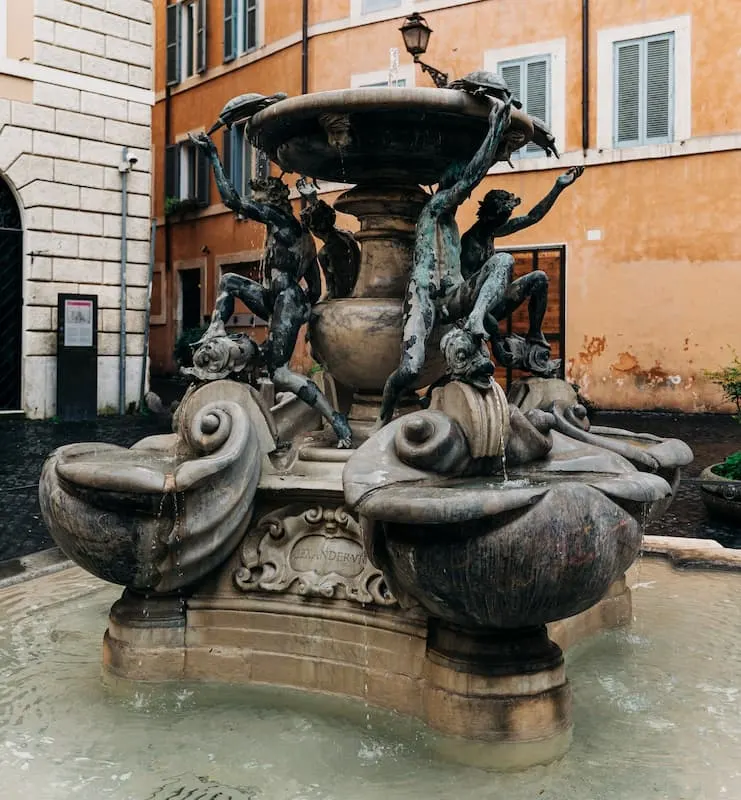
This is one of the most photographed fountains in Rome's Jewish quarter. You'll find it in Piazza Mattei, near the edge of the old ghetto, and it dates from the 1500s.
Its history is really more of a legend: Duke Mattei is said to have had it built in a single night, in front of the palace where the love of his life lived. The turtles, however, are attributed to Taddeo Landini and Bernini, and were added around 1658.
Largo di Torre Argentina
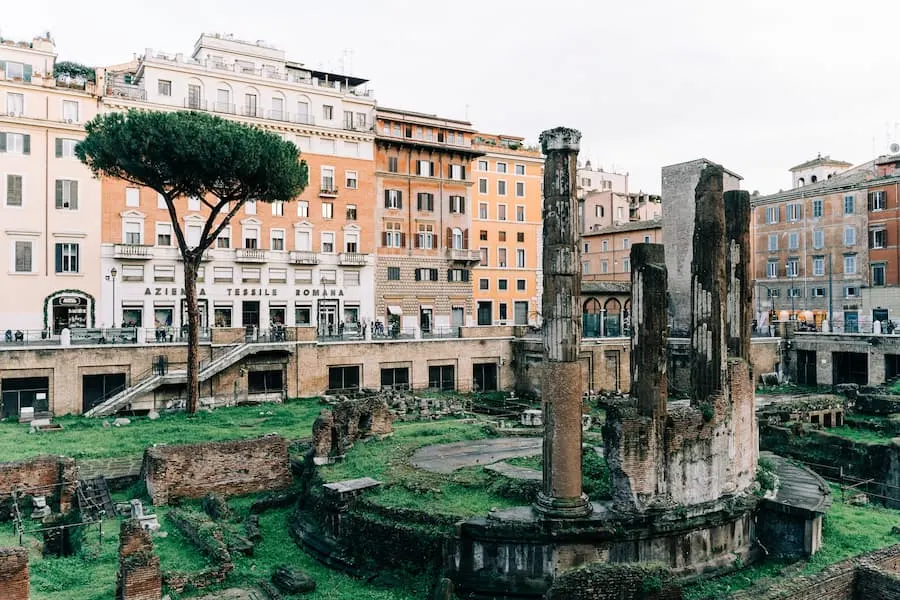
Here you can see the ruins of four Republican-era Roman temples and of the Theater of Pompey, where Julius Caesar was assassinated. The story goes that Emperor Augustus insisted on raising a monument here to mark the event.
One curious detail: you'll usually spot plenty of cats in the square, wandering among the ruins.
Where to eat in Rome's Jewish Quarter
If you're wondering where to eat in Rome's Jewish quarter, here are a few suggestions, because there are dishes you really shouldn't leave without trying:
Sora Margherita
It isn't cheap, but it's worth going for the fried artichokes, which keep the flavor of old Roman-Jewish cooking. Address: Piazza delle Cinque Scole, 30, 00186 Roma.
Pasticceria Boccione
A kosher bakery inside what used to be the ghetto. It opened in 1815 and is famous for its sour cherry and ricotta tart. Address: Via del Portico d'Ottavia, 1, 00186 Roma.
Giggetto
Another traditional spot for those famous fried artichokes. It's been open since 1923. Address: Via del Portico d`Ottavia, 21/a, 00186 Roma.
Nonna Betta
One of the smartest restaurants in Rome's Jewish quarter. Its kosher-Italian kitchen covers a wide range of dishes. Address: Via del Portico d'Ottavia, 16, 00186 Roma.
Piperno
One of the grandest and oldest restaurants in the ghetto, with tables outdoors. The menu is full of classic Roman-Jewish dishes. Address: Via Monte dè Cenci, 9, 00186 Roma.
How to get there
Its boundaries blur into rione (Italian for neighborhood) XI Sant'Angelo, on the banks of the Tiber next to the Isola Tiberina. You can walk it in two hours, and for that we recommend this free tour of Rome's Jewish Quarter so you don't miss a thing.
You can reach Rome's Jewish Quarter easily on foot from central spots like Piazza Navona or the Pantheon, both barely 10 minutes away.
Using Rome's public transport, you can get there on tram No. 8 or buses 46, 62 and 64. The closest metro station is Circo Massimo, though it's about a 16-minute walk.
Don't miss Piazza del Campidoglio and the Capitoline Museums, less than a 10-minute walk away.