
Piazza Navona: Fountains, History and What to See
Piazza Navona: Fountains, History and What to See
Contenidos de esta página sobre Roma
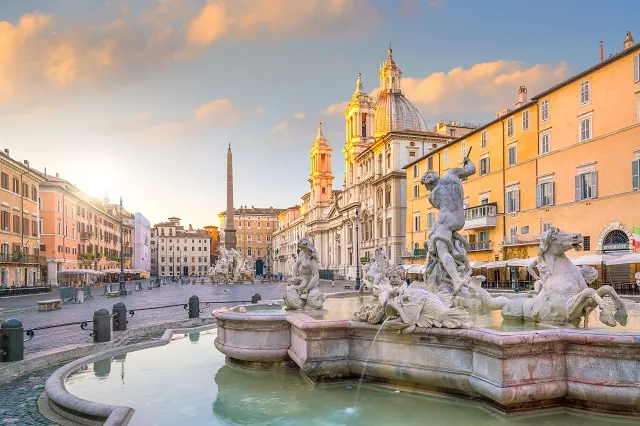
Piazza Navona is one of the most important places to see in Rome, as it sits on the site of the vanished Stadium of Domitian, an impressive ancient Roman arena that held 30,000 spectators.
Today it's one of the most famous squares in Rome. Here's the story behind its celebrated fountains, its history and the lively atmosphere of one of the most charming corners of the city.
You already know it's one of the most beautiful squares in Rome and in Italy, but do you know what to see in Piazza Navona? Here's the rundown.
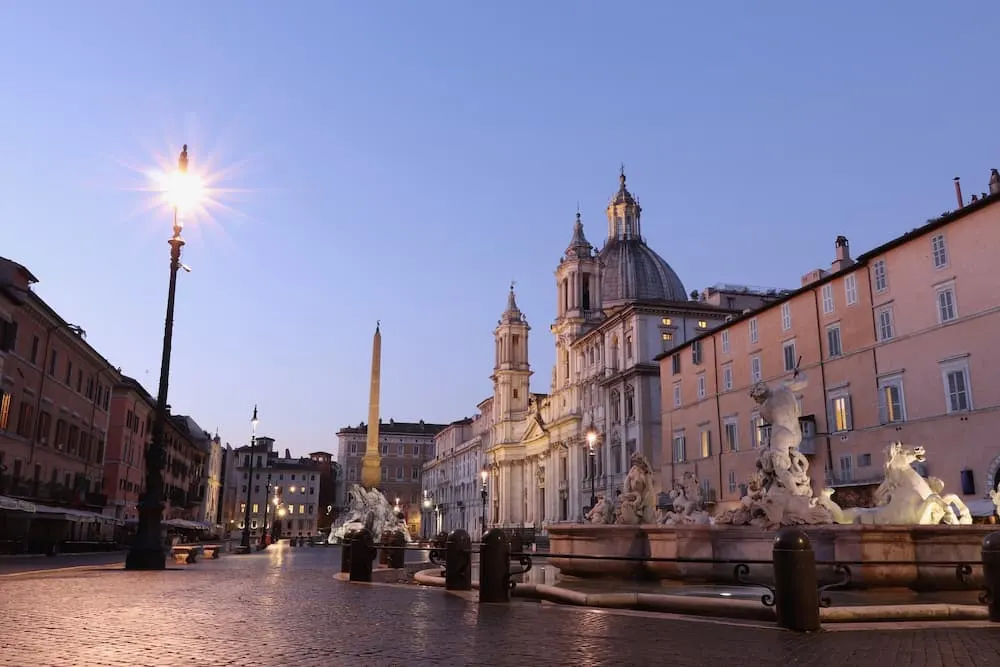
Piazza Navona, like the Spanish Steps (Piazza di Spagna), is still a meeting point for Romans and visitors alike, who sit down for dessert at one of the many outdoor cafés lining the square.
If you're looking for a place to stay, take a look at these 5 hotels in Piazza Navona, Rome and base yourself in one of the most central spots in the city.
The Stadium of Domitian
Piazza Navona was laid out by Gian Lorenzo Bernini in the 1600s on the site of the imposing Stadium of Domitian. In fact, the square keeps the same dimensions and stands exactly where the old stadium once did.
The Stadium of Domitian was built in the style of Roman circuses, specifically to host gladiator fights. It was unusually rectangular in shape and could hold up to 30,000 spectators! At a few points around the square you can still see remains of the stadium.
These days you can take a self-guided visit to the underground beneath Piazza Navona and explore the ruins of the Stadium of Domitian.
This experience is also included free among the attractions on the Go City Rome Pass.
The Fountain of the Four Rivers
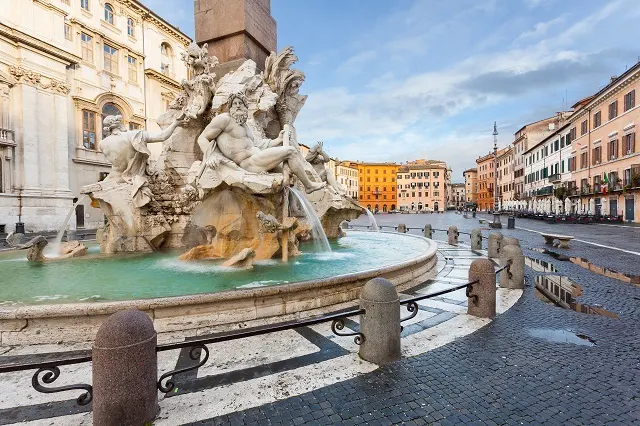
Of the three fountains that decorate Piazza Navona, the most striking by far is the beautiful Fountain of the Four Rivers.
Built by the great Gian Lorenzo Bernini between 1648 and 1651, it is dedicated to four rivers from the four continents known at the time: the Nile for Africa, the Danube for Europe, the Río de la Plata for the Americas and the Ganges for Asia. It stands in the center of the square.
The square's other two fountains are the Fountain of Neptune and the Moor Fountain, both originally created by Giacomo della Porta and later completed with elements by Bernini.
Piazza Navona is one of the most iconic squares in Italy. It's one of the must-sees we include in our itinerary for seeing Rome in a day.
- For years people have said the square bears witness to the rivalry between Bernini and his contemporary Francesco Borromini, architect of the church of Sant'Agnese in Agone, which faces the square.
- The story goes that Bernini had the Nile cover its face with a veil so as not to look at the «atrocity» of Borromini's architecture, while on the other side the Río de la Plata raises a hand as if warding off the church. There's no way the latter detail is true, since Piazza Navona was finished in 1651 and work on the church didn't begin until 1653.
- In antiquity it was used for various athletic competitions.
Today the square is full of street performers, painters and portrait or caricature artists who can capture your most distinctive features in a few minutes in a very entertaining way.
It's also a popular spot for trying Rome's famous gelato. One of the best-known gelaterias in Piazza Navona is GROM – Il Gelato come una volta. (It's on one of the corners of the square, diagonally across from the Fountain of Neptune.)
If you want to hear the legendary stories behind Piazza Navona and other spots around the city, a free tour is the cheapest way to get your bearings. Take a look at our pick of the best free tours in Rome and discover this and other unmissable places with a guide.
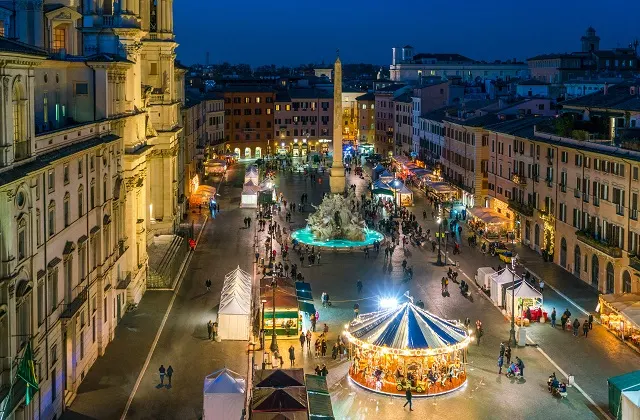
During winter in Rome, Piazza Navona fills with color thanks to a special market whose stalls sell sweets, crafts, nativity figurines, soft toys, balloons and cotton candy. It's an ideal thing to do in Rome with kids.
The traditional Christmas market in Piazza Navona takes over the square until the descent of the «Befana» (the witch) on the night between January 5 and 6.
Piazza Navona is in the Parione district. Close by you'll find major Rome landmarks such as the Pantheon, Castel Sant'Angelo (less than 10 minutes away) and Palazzo Altemps (National Roman Museum).