
Santa Maria Maggiore: What to See Inside Rome’s Basilica
Santa Maria Maggiore: What to See Inside Rome’s Basilica
Contenidos de esta página sobre Roma
- Guided tour of the Basilica of Santa Maria Maggiore
- The origins of Santa Maria Maggiore
- What to see inside the basilica
- Architectural styles at Santa Maria Maggiore
- The miracle of the falling petals
- Santa Maria Maggiore and its Spanish connection
- Tickets for Santa Maria Maggiore
- Guided tour of the Basilica of Santa Maria Maggiore
- Opening hours
- Getting there
- Nearby sights
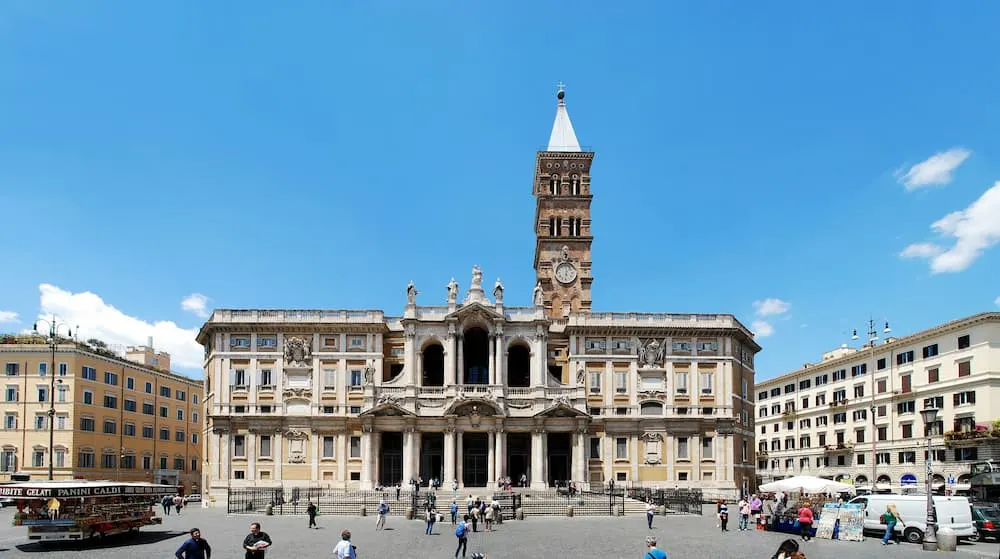
The Papal Basilica of Santa Maria Maggiore, or Basilica di Santa Maria Maggiore if you prefer the Italian, is one of the top sights in Rome and deserves a spot on your itinerary. It matters enormously to Catholics, not least because it was the first church built to honor the Virgin Mary.
Whether or not you're into art and architecture, the interior of this church will leave you speechless. It's considered one of the most important monuments in Rome.
The origins of Santa Maria Maggiore
The church of Santa Maria Maggiore is one of Rome's four major basilicas and one of the five patriarchal basilicas of the Pentarchy. The others are St. John Lateran, St. Lawrence Outside the Walls, St. Peter's Basilica and St. Paul Outside the Walls.
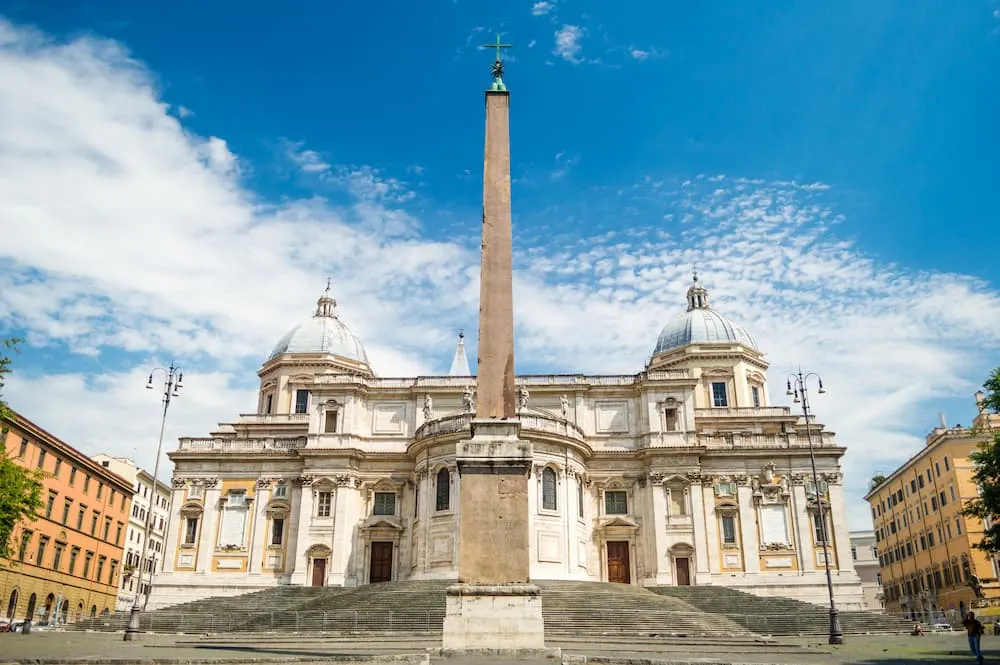
Legend has it that the Virgin herself chose the spot for the church by making snow fall on the Esquiline hill in the middle of summer.
Pope Liberius then traced the outline of the future basilica in the snow, in front of the faithful who had witnessed the phenomenon. That's the origin of the devotion to Our Lady of the Snows, also known as the White Madonna.
Santa Maria Maggiore was the first church anywhere in the world dedicated to the Virgin, thanks to the Council of Ephesus held in 431.
From then on the Virgin could officially be called the «Mother of God», which is why all the iconography in the church is devoted to her divinity.
What to see inside the basilica
St. Peter's Basilica is probably the one most visitors head for, along with the Colosseum and Rome's many museums. But the Basilica of Santa Maria Maggiore holds its own on every count.
Our advice: unless you're really pressed for time, try to see as much as you can.
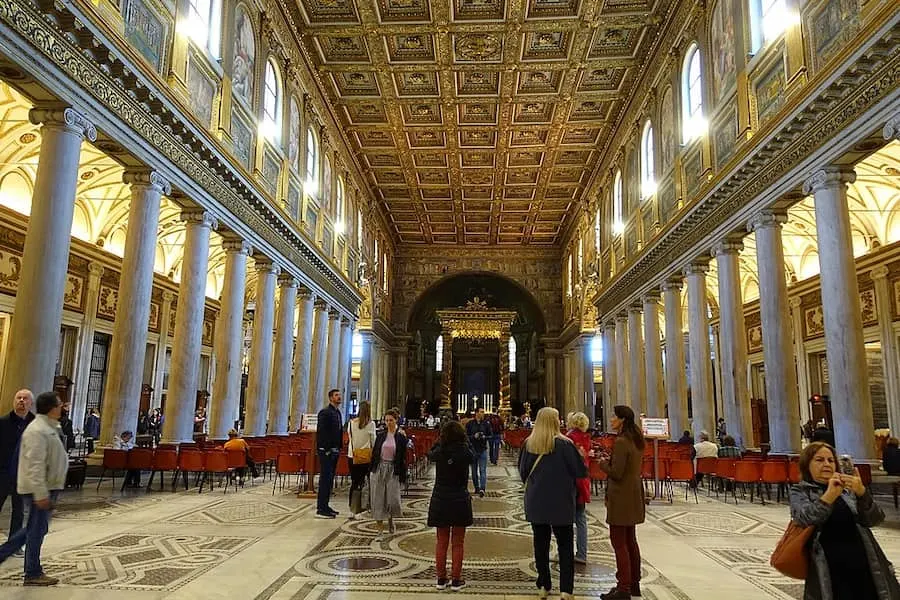
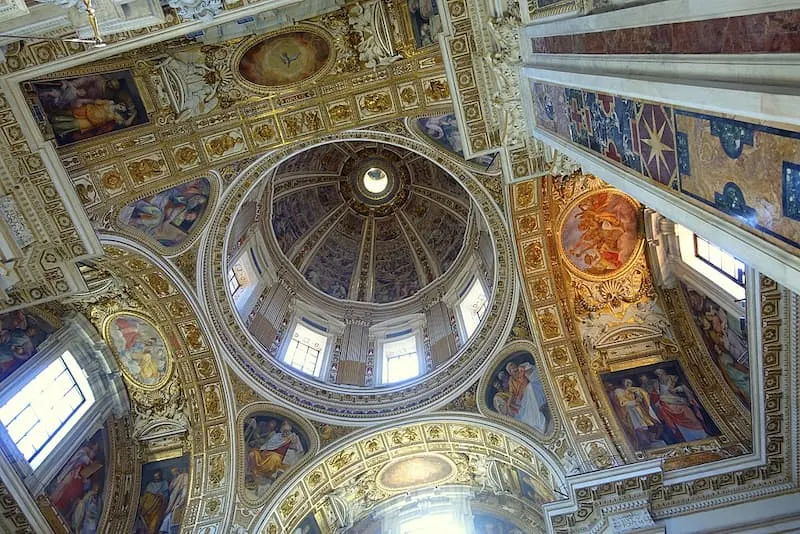
Inside the Basilica of Santa Maria Maggiore you'll find fifth-century Early Christian mosaics, panels with scenes from the Old Testament and highlights such as the Crypt of the Nativity, which recreates the place where Christ was born, plus hundreds of relics that are priceless to Christianity.
Look up, too, and you'll see the Renaissance coffered ceiling above the nave.
On your visit to Santa Maria Maggiore you can also see Bernini's tomb (it's a bit hidden away, on the first step of the presbytery), the Sistine Chapel (not to be confused with the other, far more famous Sistine Chapel in the Apostolic Palace), the Pauline Chapel (also called the Borghese Chapel) and the basilica's museum.
Entry to the basilica and to some of its interior areas is free, in case you're wondering what you can visit in Rome for free.
Architectural styles at Santa Maria Maggiore
Architecturally, the building is a historical treasure that blends everything from Early Christian to Baroque.
Starting our virtual tour with the facade, it's the work of architect Ferdinando Fuga (commissioned by Pope Benedict XIV in 1743) and is considered one of the finest examples of Roman Baroque.
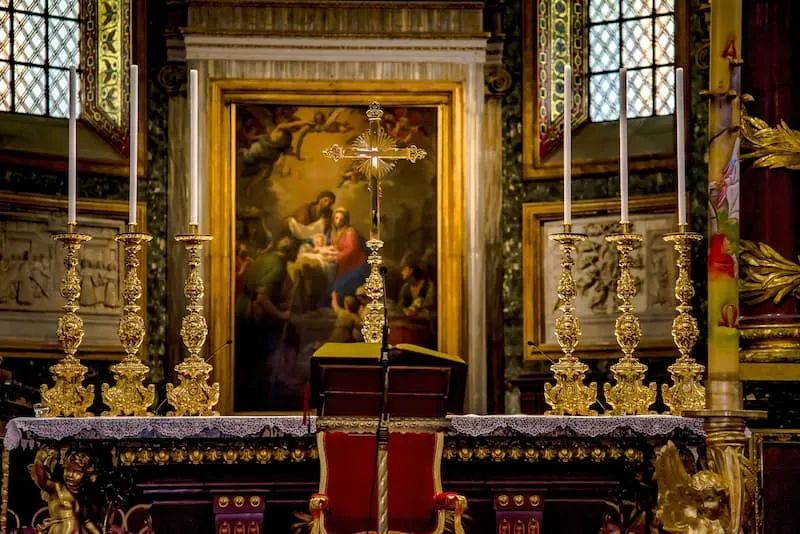
Once inside, you'll see for yourself that this is the only church in Rome that has strictly kept its basilica floor plan along with its original Early Christian structure, preserving medieval features such as the marble floor to the right of the altar.
Worth noting: over the centuries the building has undergone hundreds of alterations, and it even served as a papal residence when the Lateran Palace was in poor condition.
Something not everyone knows is that Santa Maria Maggiore, just past the Pauline Chapel, holds Michelangelo's last work: the Sforza Chapel, whose architecture is seen as a forerunner of the Baroque style that would emerge later.
The miracle of the falling petals
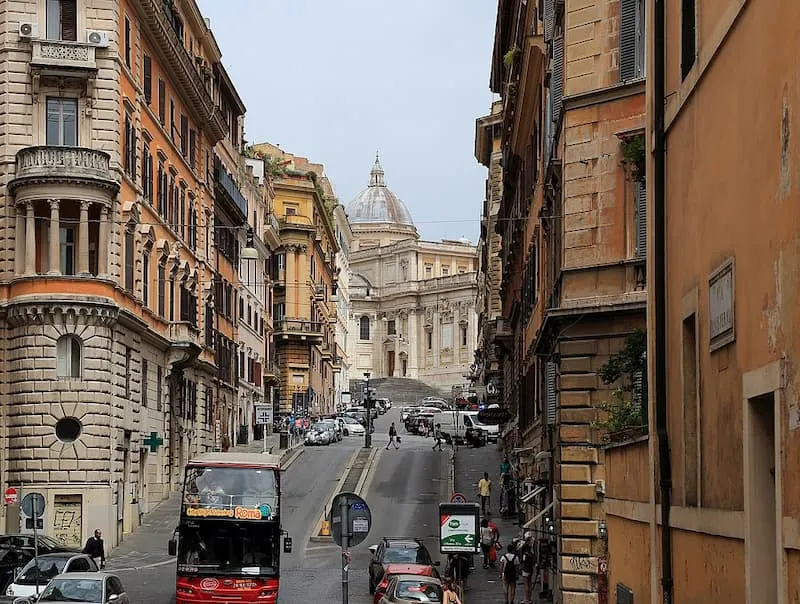
On August 5, 358, in the height of summer, the Esquiline hill was miraculously covered in snow. According to the legend, the Virgin Mary appeared in a dream to Pope Liberius and to the patrician John, telling them to build a church on that very spot. Ever since, Romans have celebrated the moment as «the miracle of the snow».
That's why every August 5 the Dedication of the Basilica of Santa Maria Maggiore is celebrated, one of Rome's most important Catholic feasts. Its high point is the traditional and genuinely stunning shower of white petals that recalls the miraculous snowfall.
Santa Maria Maggiore and its Spanish connection
On October 7, 1647, following the wishes of King Philip IV of Spain, Pope Innocent X established the Obra Pía of Santa Maria Maggiore through the apostolic constitution Sacri Apostolatus, assigning an annual income to the basilica's chapter in exchange for liturgical honors and prayers for the Spanish monarchy.
Since then, Spain's monarchs have been honorary protocanons of the Liberian Chapter of the Basilica of Santa Maria Maggiore.
Tickets for Santa Maria Maggiore
Entry to the basilica is free, but if you'd rather have a fuller, more detailed experience, you can take a guided tour of Santa Maria Maggiore.
Along with a professional guide, you'll get to see spaces such as the Loggia delle Benedizioni, the Hall of the Popes, the Scala di Gian Lorenzo Bernini and the new Museo Storico Liberiano.
Another good way to see Santa Maria Maggiore is on a tour of the Catacombs of Rome, which includes transport plus a visit to the Via Appia and the Basilica of St. John Lateran.
Opening hours
Daily from 7:00 to 18:30
Getting there
Address: Piazza di Santa Maria Maggiore, Rome.
- Metro: Termini, lines A and B
- Bus: lines 16, 70, 71 and 714
Nearby sights
Around the church, or relatively close by, you'll find the Palazzo Massimo alle Terme, Piazza della Repubblica and the Basilica of Santa Maria degli Angeli.
Termini Station is also nearby, where you can catch a train to anywhere in Italy, as are the famous Baths of Diocletian.