
Appian Way: Walking Rome’s Most Famous Ancient Road
Appian Way: Walking Rome’s Most Famous Ancient Road
Contenidos de esta página sobre Roma
- Rome Catacombs, Via Appia and Basilicas Tour
- History of the Via Appia
- Where the Via Appia Antica begins
- Rome Catacombs, Via Appia and Basilicas Tour
- What to see on the Via Appia
- Appia Antica Regional Park
- Porta San Sebastiano
- Church of Quo Vadis
- Circus of Maxentius
- Imperial villa and mausoleum of Maxentius
- Catacombs of San Sebastiano and San Callisto
- Villa of the Quintilii
- Tips for visiting the Via Appia
- Getting to the Via Appia by bus
- The Via Appia by bike
- Tours of the Via Appia
- Rome Catacombs, Via Appia and Basilicas Tour
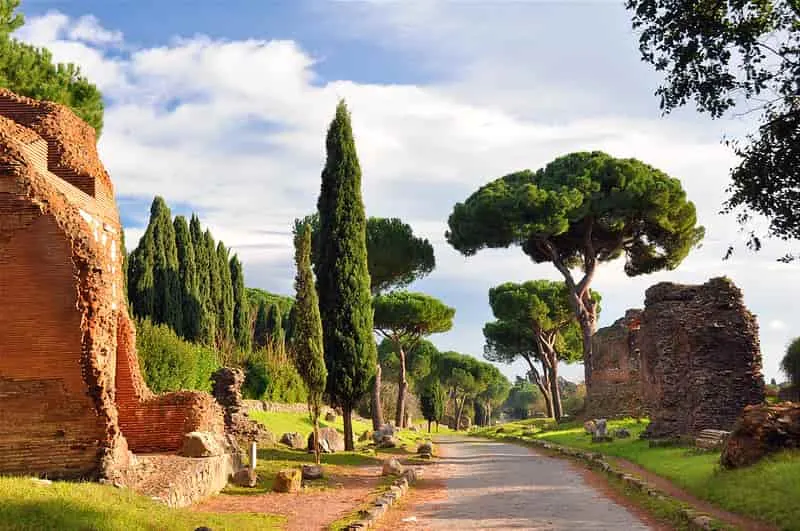
If in ancient times all roads led to Rome, the most important of them all was without doubt the Via Appia. Its construction was vital to the expansion and consolidation of the ancient Roman Empire, so much so that it became one of the emblematic symbols of the Republic.
If you're putting together a list of sights to see in Rome, you should include the Via Appia in your trip. Here's why.
History of the Via Appia
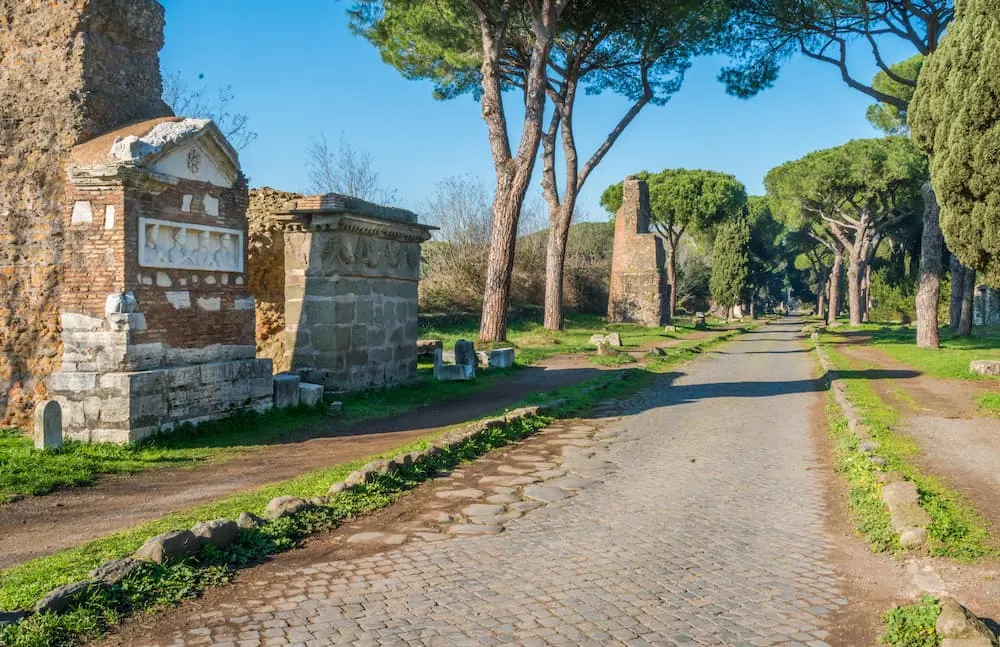
It was the first and best known Roman road. Originally it linked the city of Rome with Capua and was known among the Romans as the Regina viarum, the queen of roads.
Like many of humanity's great advances, for better or worse, it was war that drove the construction of the Via Appia. Around 343 BC Rome and Capua tried to form an alliance, but the Samnites (ancient Italic peoples who lived in the mountainous region of south-central Italy) were not going to allow it without a fight, which led to the so-called Samnite Wars.
During the course of these wars, the Romans realized they had a logistical problem. It was impossible to supply their troops on the battlefield in time. Above all because the Pontine Marshes (Pomptinae paludes) lay between Rome and Capua.
In 312 BC Appius Claudius (Appius Claudius Caecus) was chosen as censor of Rome, and he decided to put an end to the supply problems once and for all. Thanks to his determination, work began on an aqueduct and on the Via Appia.
The Via Appia brought the Samnite Wars to an end by solving all the logistical problems the Roman troops faced in the conflict, to the point that they became an unstoppable fighting force.
Where the Via Appia Antica begins
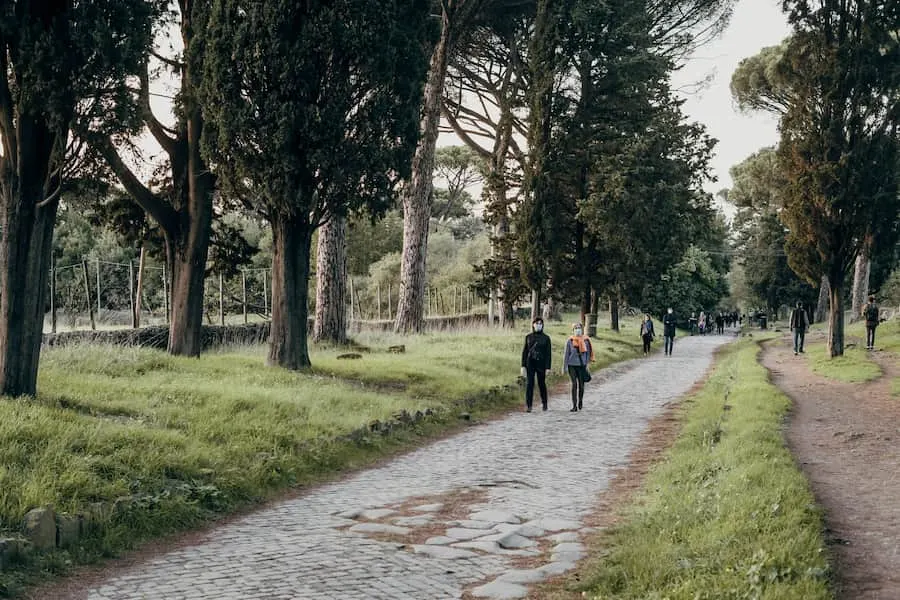
The Via Appia Antica began at the Roman Forum and crossed the Servian Wall toward the Porta Capena, before leaving the city of Rome and skirting the Hill of Mars (Clivus Martis).
Following its route, the Via Appia climbed the steep Alban Hills and crossed the Pontine Marshes, then ran along the coast to Tarracina, from where it headed north to the city of Capua.
The original route of the Via Appia Antica was 212 km long and it is thought to have been the first road to use lime cement, along with volcanic stone. The finish was so extraordinary that you couldn't make out the joints.
What to see on the Via Appia
The whole area of the Via Appia Antica is an idyllic setting, largely given over to farmers working the land, but along the way you'll come across plenty of monuments and places of interest.
Worth knowing: the Go City Rome Pass includes a free bike ride along the Via Appia.
Appia Antica Regional Park
The Parco Regionale dell'Appia Antica is a protected area of some 3,400 hectares southwest of the city of Rome.
The park holds archaeological treasures such as the Catacombs of Rome, the Circus of Maxentius (Circo di Massenzio), aqueducts, about 16 km of well-preserved Via Appia and many more ancient remains. It's also one of the free places to visit in Rome.
The Parco Regionale dell'Appia Antica is one of the most visited areas, not just for its monuments and archaeological treasures but because it's a great spot for a family day out. If that's your case, we've put together a selection of family hotels in Rome to help you plan your trip.
Porta San Sebastiano
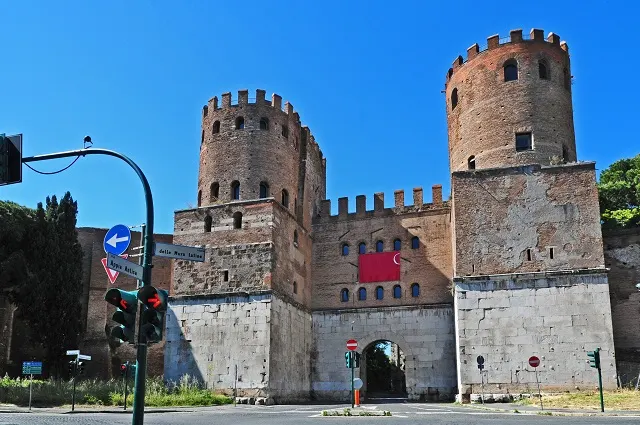
Porta San Sebastiano is the oldest gate and the one that best preserves the splendor of its past. It was part of the ancient Aurelian Walls. It was originally called Porta Appia, but from the 15th century the name Porta San Sebastiano caught on. Note that the structure stands very close to the Basilica of San Sebastiano.
Today Porta San Sebastiano houses the Museo delle Mura (museum of the walls), one of the loveliest spots on the Via Appia.
Church of Quo Vadis
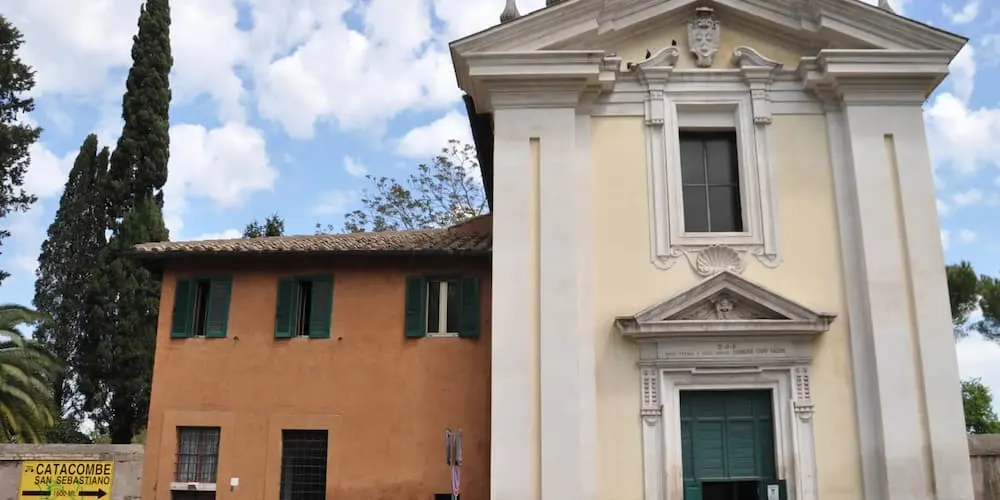
The Church of Quo Vadis was built on the very spot where Jesus Christ appeared to Peter as he was fleeing Rome to avoid being martyred by the emperor Nero.
According to Christian tradition, Peter was fleeing along the Via Appia when he met Jesus walking in the opposite direction. «Domine, quo vadis?» (Lord, where are you going?), asked Peter the apostle. Jesus replied, «Venio Romam iterum crucifigi» (I am coming to Rome to be crucified again).
The story goes that Peter then returned to Rome to accept the martyrdom of his own crucifixion, while a footprint of Jesus was left imprinted on one of the paving slabs of the Via Appia.
Circus of Maxentius
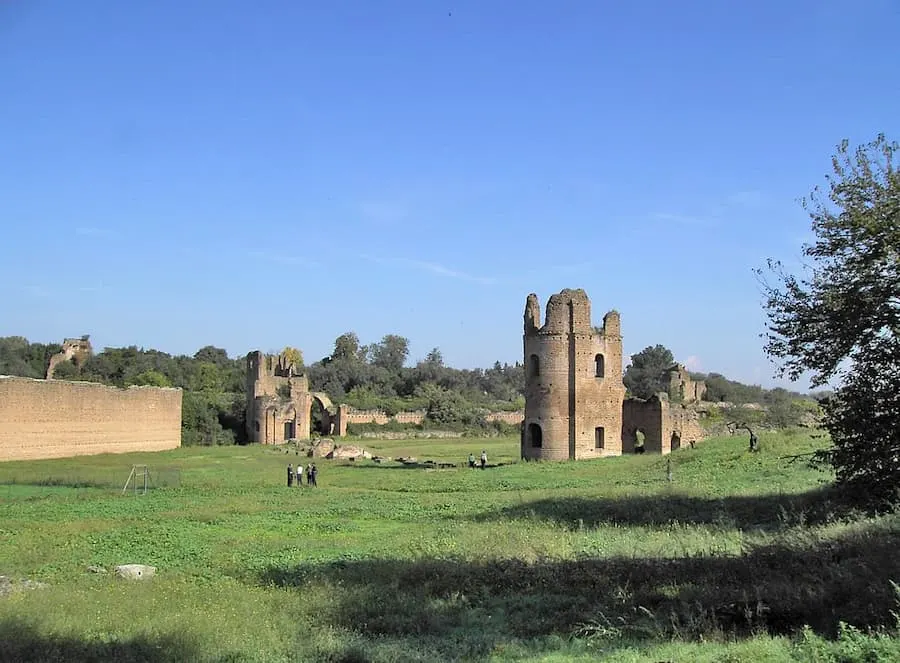
The Circus of Maxentius, or Circo di Massenzio, was a circus of the ancient Roman Empire standing beside the Via Appia.
This circus is the best preserved and most studied of its kind. It was part of an urban project that also included an imperial villa and a mausoleum. The whole complex was built around the year 309 on the orders of the emperor Maxentius.
It measures 520 meters long and 92 meters wide, and is believed to have held 20,000 spectators. Its arena hosted the popular horse-drawn chariot races.
Imperial villa and mausoleum of Maxentius
Along with the circus, the villa and the mausoleum form part of the so-called Maxentian complex. Today it's a rich archaeological area around the third kilometer of the Via Appia.
Very little remains of the imperial villa's original splendor. There are a few ruins that, with a bit of imagination, you can piece together into a picture, though the heavy vegetation doesn't make it any easier.
The mausoleum, meanwhile, is thought never to have been finished, although its majestic circular vault, 33 meters in diameter (inspired by the Pantheon of Agrippa), did hold the remains of Valerius Romulus (Maxentius's son, who died at just 14) and of his wife Valeria Maximilla (daughter of the emperor Galerius).
Catacombs of San Sebastiano and San Callisto
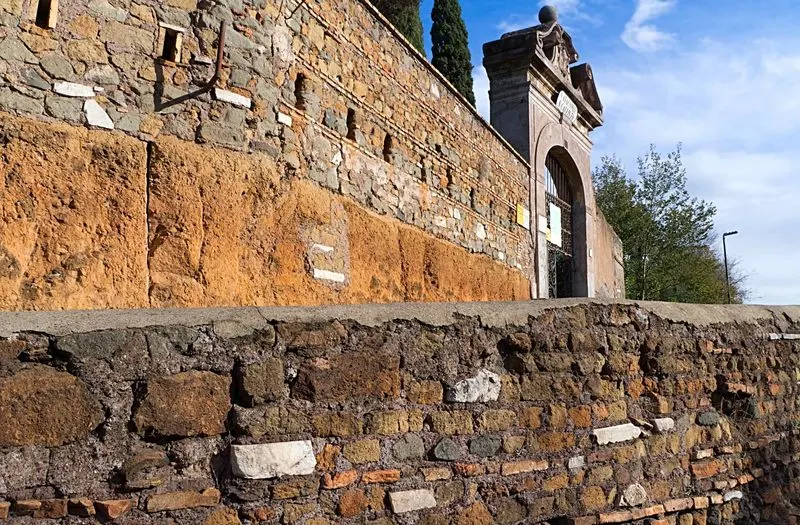
These are two of the most visited Catacombs of Rome, and they're very close to each other.
You'll find the Catacombs of San Sebastiano just a couple of kilometers from the Porta San Sebastiano. This is where one of the prettiest stretches of the whole Via Appia begins. Likewise, the Catacombs of San Callisto lie between the Church of Quo Vadis and the Basilica of San Sebastiano.
Villa of the Quintilii
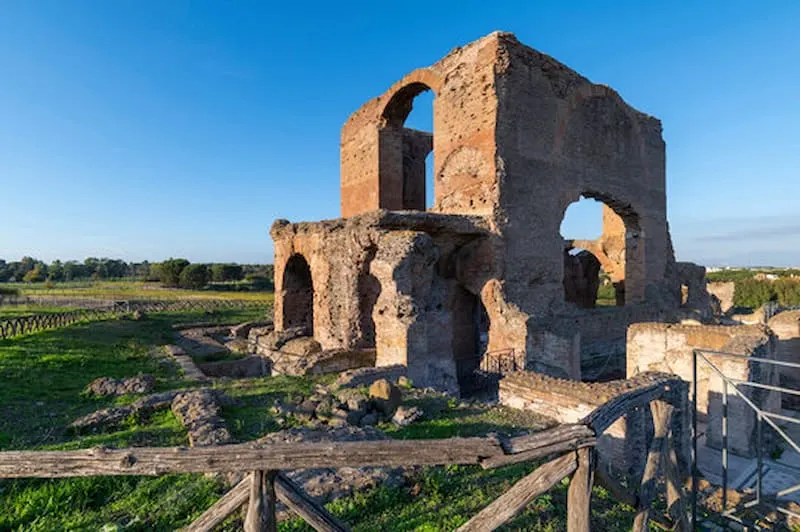
This is an ancient residential complex on the Via Appia. It originally belonged to the brothers Sextus Quintilius Condianus and Sextus Quintilius Valerius Maximus, members of a senatorial family and consuls in the year 151.
Some thirty years later, the Quintilii brothers were killed for allegedly plotting against the emperor Commodus. From then on the huge estate became imperial property.
The ruins of the Villa of the Quintili cover so much ground that when archaeological work began, it was thought to be an entire city, which locals called Roma Vecchia.
The huge residential complex included its own baths, supplied by its own aqueduct, plus gardens, buildings for performances, living quarters and even a hippodrome. The Villa of the Quintili was so big that it had its own streets and avenues connecting the different buildings on site.
When you visit the Villa of the Quintili you'll find a lovely house-museum with marble friezes, sculptures and other valuable pieces unearthed during the excavations. There's also an ancient terrace with beautiful views over the countryside, as well as the nympheum (a monument dedicated to the nymphs), the tepidarium (think of an ancient Roman spa with warm water) and the baths.
Tips for visiting the Via Appia
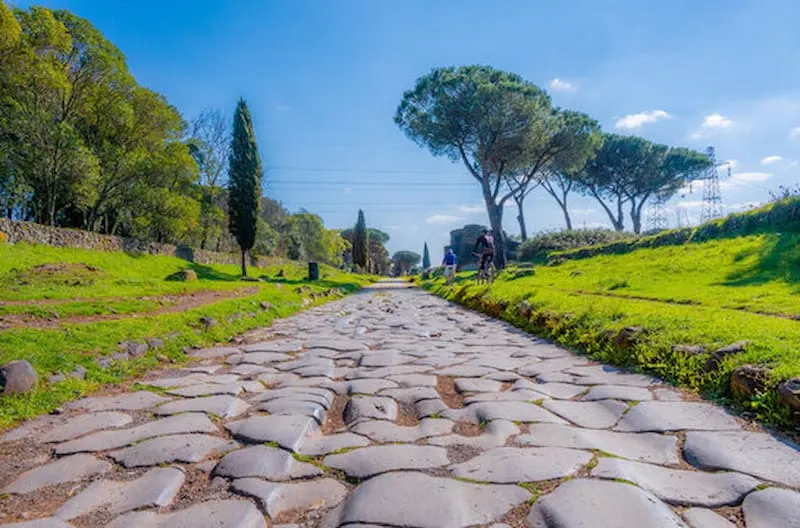
First things first: walking the Via Appia means a walk through the countryside, so leave the flip-flops and heels behind. Sneakers and comfortable clothes are the way to go.
If you want to get to know the Via Appia properly, we offer a roughly three-hour Via Appia tour where you won't miss a thing. It includes a visit to the catacombs, the basilicas of San Giovanni in Laterano and Santa Maria Maggiore, and of course the Via Appia itself.
But if you'd rather go on your own, the usual starting point is the Via Appia Antica tourist information center. Several buses run there from central Rome:
Getting to the Via Appia by bus
Bus 118
Covers a good stretch of the Via Appia. It leaves central Rome from the Circus Maximus stop toward Piazza Venezia and follows a circular route that passes the Colosseum metro stop before heading out to the Via Appia.
It stops at the Baths of Caracalla, the Catacombs of San Callisto and the Catacombs of San Sebastiano, as well as the tourist information center.
Bus 218
It has plenty of stops, runs about once an hour and ends its route in front of the Basilica of San Giovanni. It also stops at the tourist information center, but unlike bus 118 it doesn't run along any stretch of the Via Appia Antica.
The Via Appia by bike
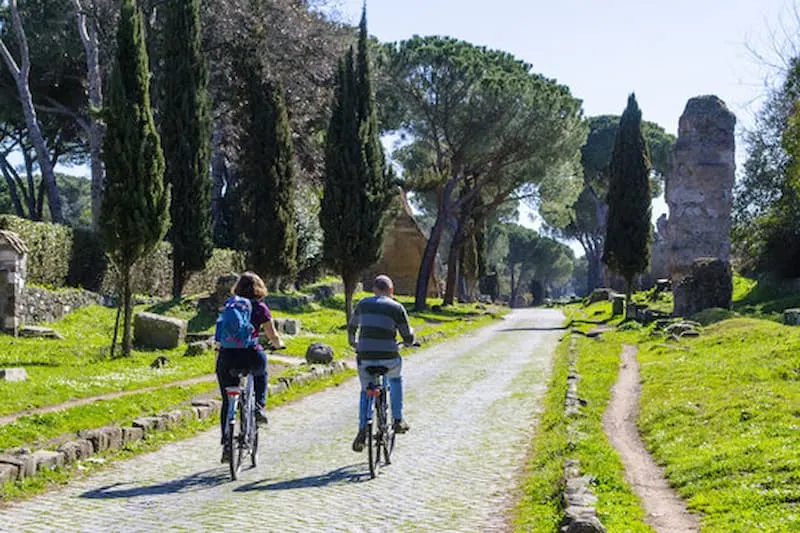
Another very popular way to explore the Via Appia is by bike. You can do it with the Go City Rome Pass, which includes a free electric bike ride through the park, or you can simply rent whatever bike you like.
There are plenty of options if you decide to see it on two wheels, but we recommend a guided bike tour of the Via Appia, which will help you understand the area in far more detail and keep you out of unnecessary trouble.
As one of Rome's tourist hotspots, the Via Appia has everything you need. You'll find plenty of places to eat or buy drinks without any hassle.
Tours of the Via Appia
To see the Via Appia in detail, there's nothing better than joining this tour for an unforgettable experience. The meeting point is near Piazza Venezia, where a maximum of six people gather with the guide who'll accompany you throughout. Next you'll board a private vehicle that takes you through some of Rome's most distinctive corners.
From the car you'll get panoramic views of the Roman Forum, the Baths of Caracalla and the Circus Maximus. A little further on, you'll take the road by the Pyramid of Cestius until you reach the Porta San Sebastiano, where the Via Appia route officially begins. You can see more details using the button below: