
Lateran Basilica: Rome’s Cathedral and What to See Inside
Lateran Basilica: Rome’s Cathedral and What to See Inside
Contenidos de esta página sobre Roma
- Rome Catacombs and Basilica of St. John Lateran Tour
- The history of St. John Lateran
- Inside the Basilica of St. John Lateran
- The main nave
- The altar of St. John Lateran
- Rome Catacombs, Via Appia and Basilicas Tour
- The facade of the Basilica of St. John Lateran
- The cloister of St. John Lateran
- The baptistery of San Giovanni in Laterano
- The Scala Santa
- The Lateran Palace
- Lateran Obelisk
- St. John Lateran tickets
- Ticket to the Basilica of St. John Lateran
- Opening hours
- Getting there
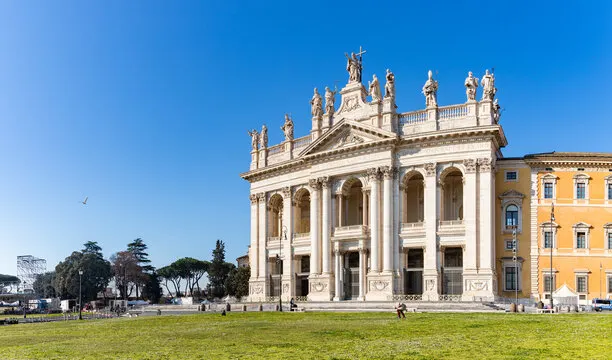
The Basilica of St. John Lateran is one of Rome's four papal basilicas, along with St. Peter's Basilica, St. Paul Outside the Walls and Santa Maria Maggiore, but it stands out among them as the oldest and the highest ranking of the four.
It's one of those places to visit in Rome for its religious and cultural weight, and it's also a genuine architectural and artistic gem.
The history of St. John Lateran
The story goes that before the Battle of the Milvian Bridge (312 AD) Constantine had a vision in which Christ led his troops to victory. The victory came. From then on, the emperor allowed freedom of worship and, in gratitude to Jesus Christ, ordered this basilica to be built. It was consecrated by Pope Sylvester I in 324.
Its official name is the Archbasilica of the Most Holy Savior and of Saints John the Baptist and John the Evangelist, «Archibasilica Sanctissimi Salvatoris» (if you want to show off with the Latin), though everyone simply calls it the Basilica of St. John Lateran.
Five centuries later, in the earthquake of 846, the basilica was almost completely destroyed. The building we see today was commissioned by Pope Sergius III, who dedicated it to St. John the Baptist. Later, in the 12th century, Pope Lucius II also dedicated the basilica to St. John the Evangelist, since it was his writings that bore witness to the life and work of Jesus Christ.
The Basilica of St. John Lateran is the oldest in the world, older even than St. Peter's Basilica.
Inside the Basilica of St. John Lateran
Many churches in Rome are World Heritage sites, and the interior of the Basilica of St. John Lateran is without doubt part of that treasure.
Among all the churches of the Vatican, the Basilica of St. John Lateran stands out for being divided into five naves, each more than a hundred meters long. Baroque is the dominant style inside, largely thanks to the work of Francesco Borromini, who was charged with transforming it in the 17th century.
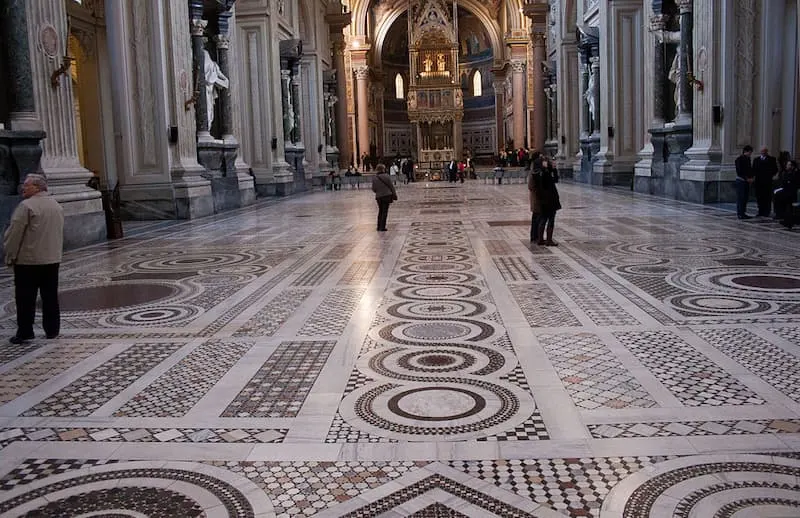
From the earlier decoration, the Gothic ciborium, the Cosmatesque floor and the coffered ceiling of the central nave have survived to this day. The medieval apse mosaics also remain, symbolizing the water needed for the sacrament of baptism, although they had to be restored.
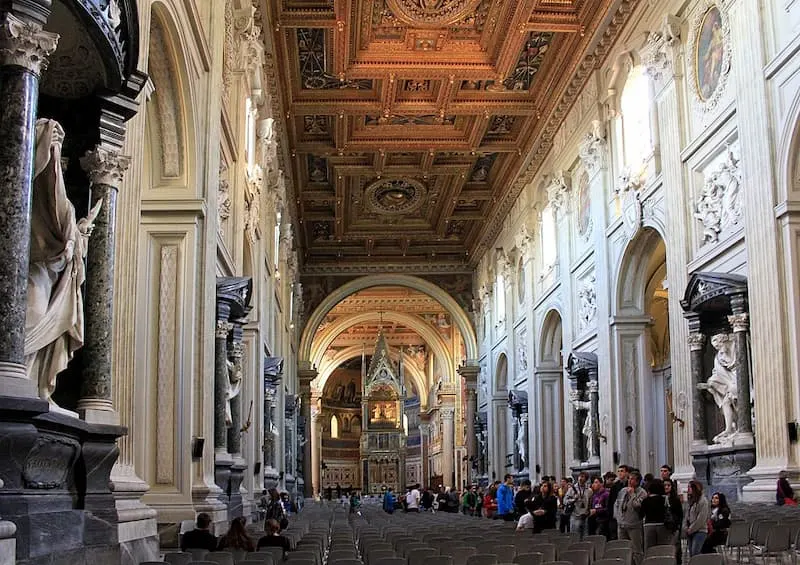
Since the early 13th century, the imposing main nave has housed the enormous statues of the twelve apostles. Each one is framed in a niche of green marble set into its own pillar.
Some scenes from the Old Testament are depicted above the apostles' niches, while between the windows, inside oval frames, you can see various prophets.
The altar of St. John Lateran
Beneath the Gothic baldachin, on the left side of the basilica, you'll find the altar of St. John Lateran, one of the most sacred treasures of the Catholic Church, because the relics of St. Peter and St. Paul rest there in a silver urn.
Above the apse you'll also see the cathedra, the bishop's throne, and some mosaics. The altar of St. John Lateran was built during the jubilee of 1600, in the time of Pope Clement VII.
This popular Rome tour includes a guided visit with transport to the Catacombs of Rome, the Via Appia Antica and the Basilicas of St. John Lateran and Santa Maria Maggiore.
The facade of the Basilica of St. John Lateran
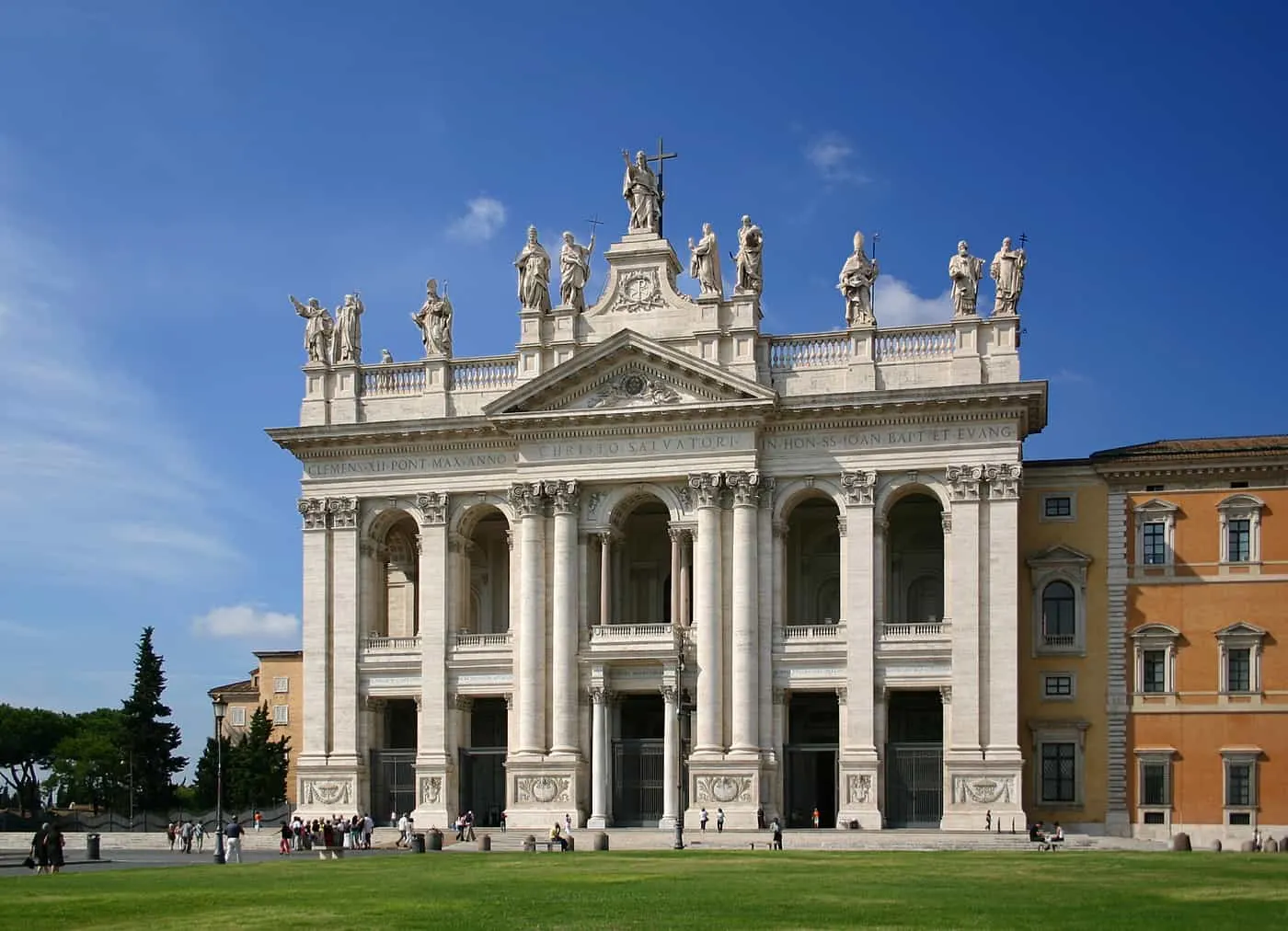
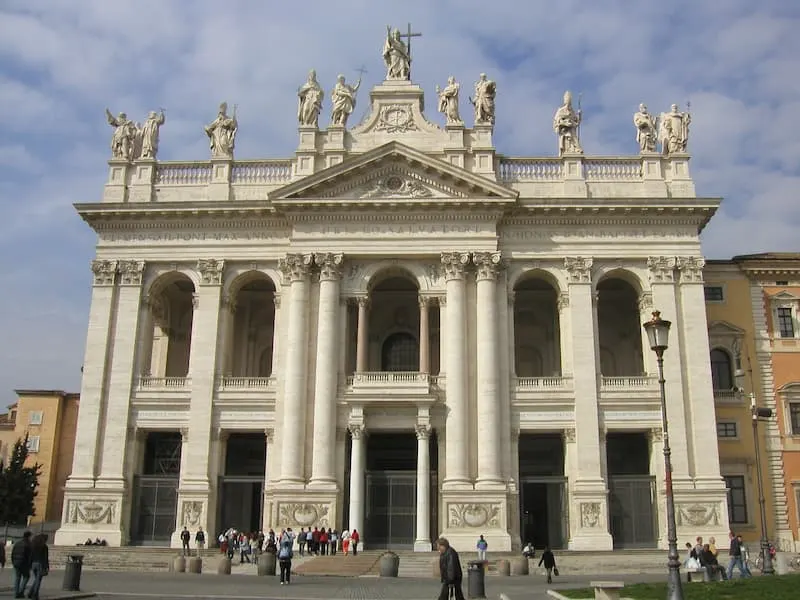
The architect Alessandro Galilei was responsible for remodeling the facade of the Basilica of St. John Lateran in the 18th century. It consists of a portico with five entrances and an open gallery on the upper level.
To the left of the portico stands a statue of the emperor Constantine, while the central door comes from the Roman Forum, specifically from the Curia Julia, and was placed there by Francesco Borromini.
The facade is crowned by fifteen statues, each about seven meters tall. The central one represents Jesus Christ, flanked by St. John the Baptist and St. John the Evangelist.
The rest depict the doctors of the Greek and Latin churches, while on the north side there's a notable work by Domenico Fontana with two bell towers dating from the Middle Ages.
Below we look at the other structures that form part of the St. John Lateran complex.
The cloister of St. John Lateran
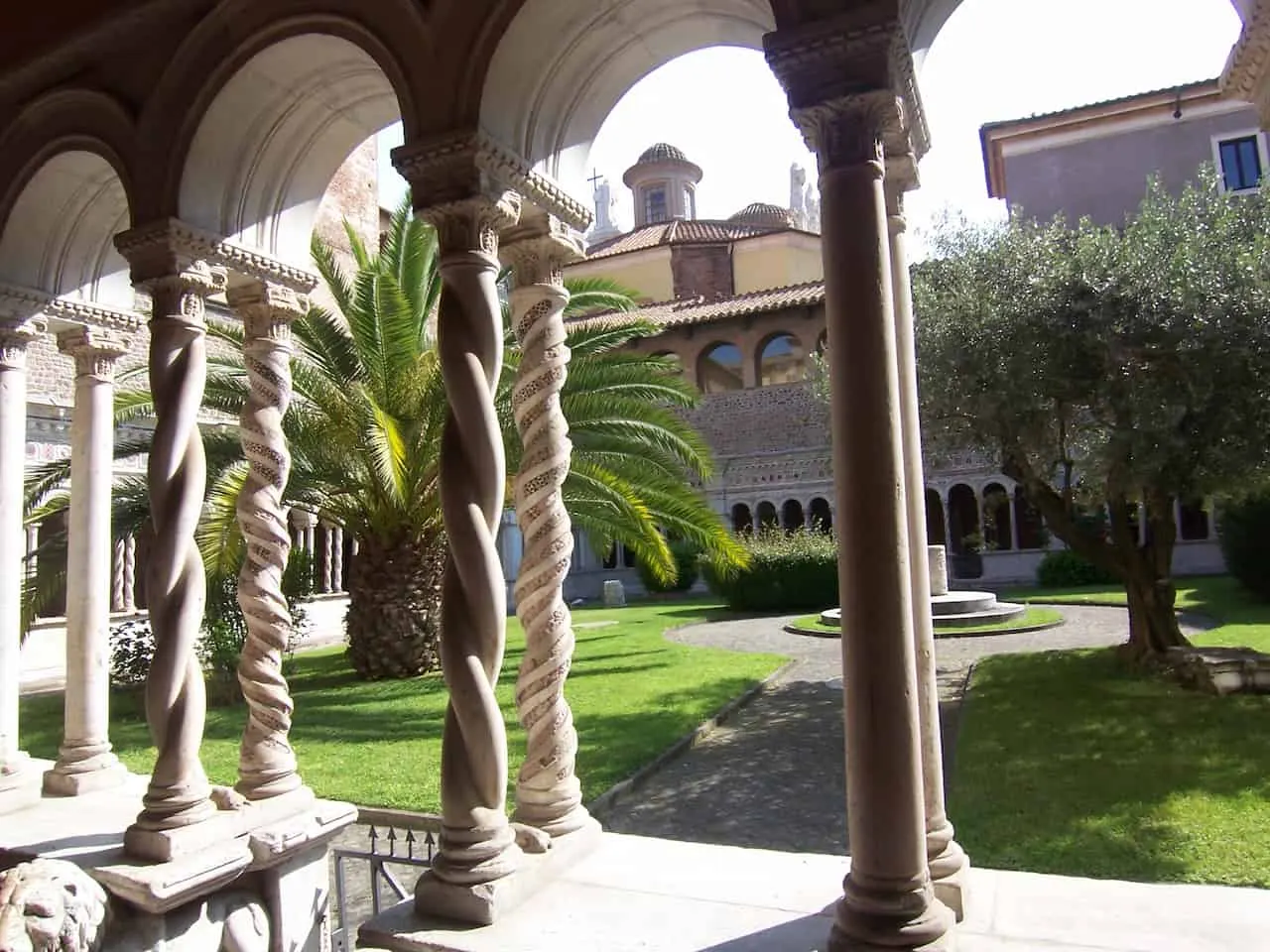
The Vassalletto family were renowned masters of marble decoration, and they built the Lateran Cloister between 1215 and 1232.
Tomb slabs and remains from Roman and early Christian excavations were used in its construction, a common practice you can see for yourself at the Vatican Museums. The colored mosaics and the spiral columns are the highlights of this cloister, which measures 36 meters long.
The baptistery of San Giovanni in Laterano
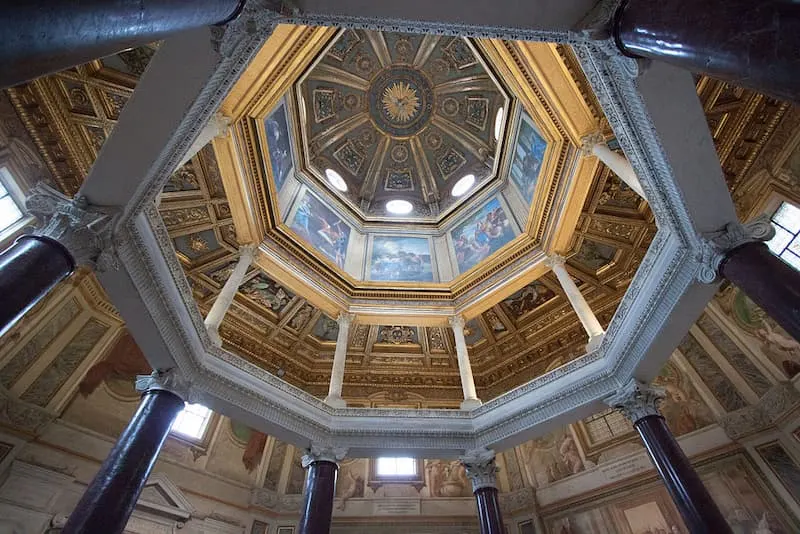
The baptistery of St. John Lateran (or San Giovanni in Laterano in Italian) is the oldest in Rome. It was built on the baths of an old house, on the orders of the emperor Constantine.
Pope Sixtus III then ordered a complete rebuild between 432 and 449, adding an atrium. Later, in the 17th century, the whole thing was restored by Francesco Borromini.
The Scala Santa
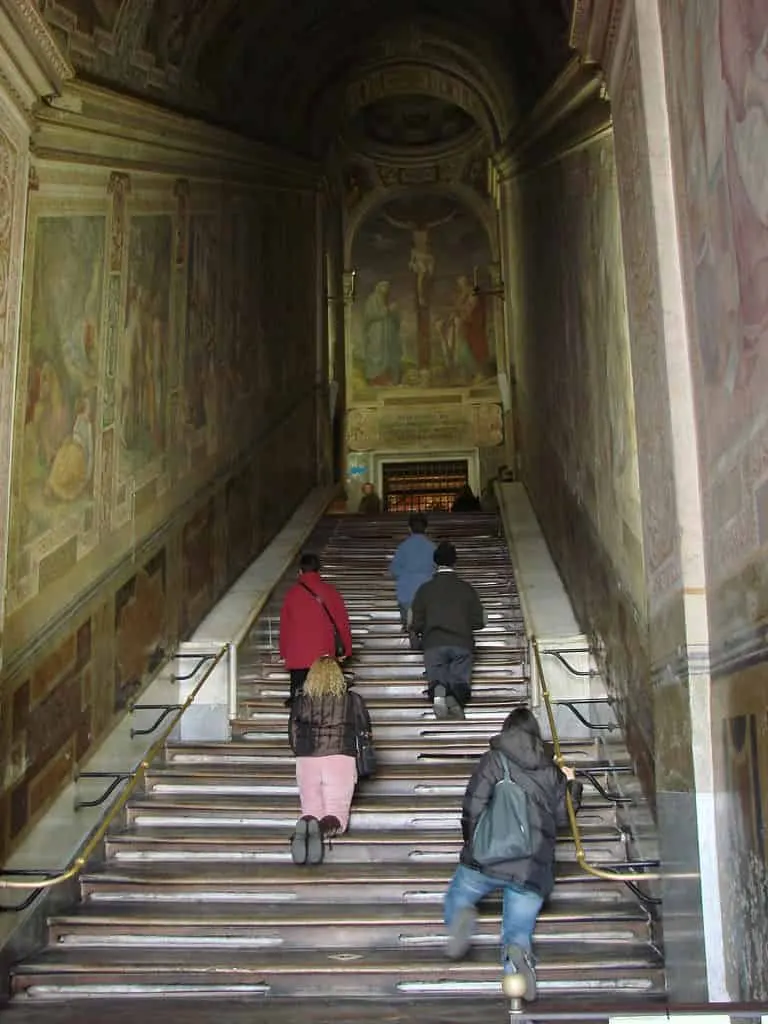
The Holy Stairs are one of the most sacred and historic places in Vatican City. The story goes that Jesus of Nazareth climbed them on Good Friday to be judged by Pontius Pilate.
Today they're in a chapel next to the Basilica of St. John Lateran. Their 28 steps must be climbed on your knees as an act of penance and prayer.
As you go up, you'll see sections covered by glass where you can make out bloodstains believed to be those of Jesus Christ.
The Scala Santa has been a UNESCO World Heritage site since 1980.
Join one of the best free tours in Rome and learn all about the basilica and the Holy Stairs with an expert guide.
The Lateran Palace
For around a thousand years this was the papal seat and the pope's official residence, until the papal exile began in the time of Pope Benedict XI. It sits right next to the basilica.
It's worth noting that the Lateran Pacts were signed here in 1929. They established the Vatican's political independence from the Italian government.
That meant the restoration of relations between the Catholic Church and the Kingdom of Italy, which had been broken off since 1870.
Lateran Obelisk
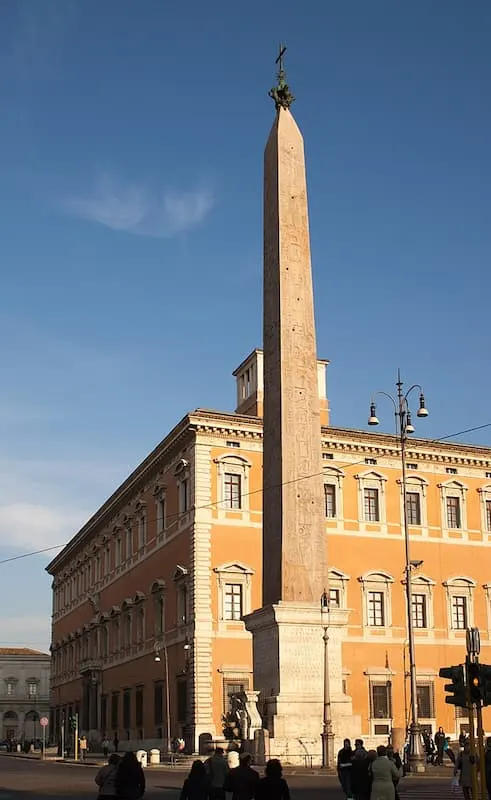
It's the tallest obelisk in Rome and also the largest of the ancient Egyptian obelisks still standing.
It weighs around 455 tons. Originally it was part of the temple of Amun in the ancient city of Karnak. In the 4th century, along with the Obelisk of Theodosius, it was brought here on the orders of Emperor Constantius II.
It stands in the square in front of the Basilica of St. John Lateran and is one of the monuments of Rome you shouldn't miss.
St. John Lateran tickets
Entry to the basilica is free, but if you buy the ticket to the Basilica of St. John Lateran, you get an audio guide and access to places like the cloister, the Sancta Sanctorum, the Baptistery, the Scala Santa and the Treasure Museum.
You can also visit the basilica's highlights for free with the Roma Pass Omnia tourist pass.
Opening hours
Daily from 7:00 to 18:30
Getting there
If you're staying in the Celio or Esquilino neighborhoods, you can walk to the basilica. The Colosseum is also just about a 15-minute walk away. See Celio and Esquilino.
You can get there by Metro to San Giovanni station on line A, or by bus on lines 16, 81, 85, 87, 186, 650, 810 and 850.