
Catacombs of Rome: Which Ones to Visit and How to Do It
Catacombs of Rome: Which Ones to Visit and How to Do It
Contenidos de esta página sobre Roma
- Discover the Catacombs of Rome
- History of the Roman catacombs
- Reasons to visit the catacombs
- Tour of the Catacombs of San Callisto and the Via Appia
- Which catacombs can you visit in Rome?
- 1. Catacombs of San Callisto
- 2. Catacombs of San Sebastiano
- 3. Catacombs of Priscilla
- 4. Catacombs of Domitilla
- 5. Catacombs of Sant'Agnese
- Visiting the catacombs of Rome
- Discover the Catacombs of Rome
- Prices
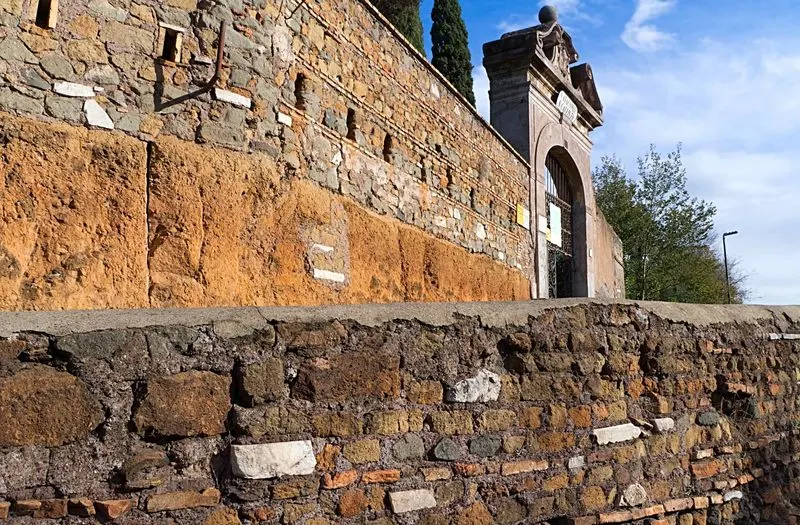
The Catacombs of Rome are a network of tunnels running for miles, where Jews and Christians buried their dead. Here you'll find their history, which catacombs are the best to visit, and why they're one of the places we always recommend when people ask us what to see in Rome.
History of the Roman catacombs
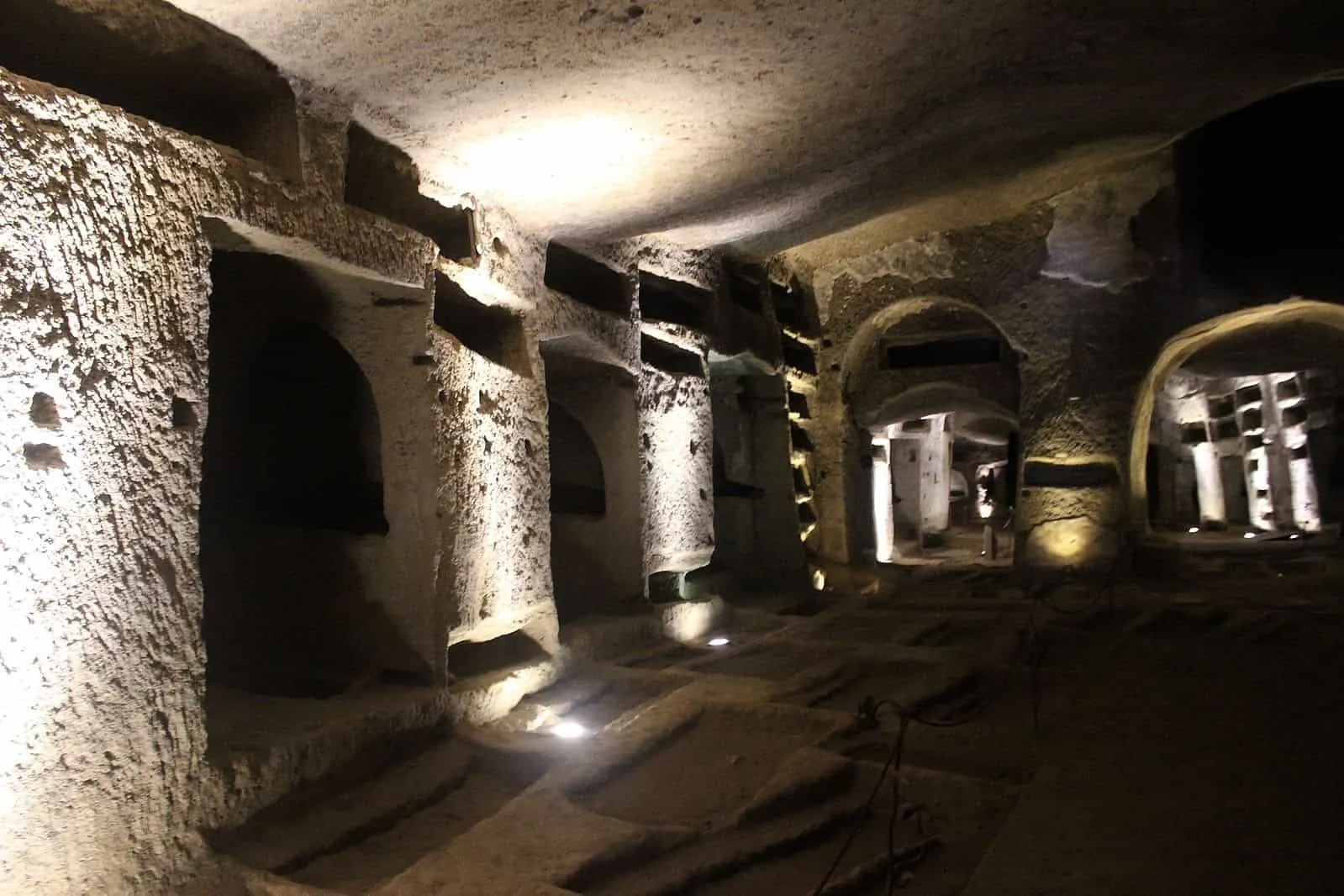
Rome's catacombs began as a series of tunnels used as a cemetery by some pagan citizens, Jews and the first Christians.
Roman law at the time forbade burying the dead inside the city, which is why the catacombs were located beyond its limits, in some stretches following the Via Appia, specifically near the quarry. Hence the name “catacomb,” which means “beside the quarry.”
Building them became necessary because the first Christians, like the Jews, didn't share the pagan custom of cremating their dead. To solve the problem in a city with no spare land, work began on these tunnels, which ended up as a labyrinthine network lined with rectangular niches carved into the rock.
As a rule, bodies were wrapped in white sheets before being placed in the niches, which were then sealed with a marble slab or simply with terracotta, engraved with the name of the deceased and the matching religious symbol.
Digging on the Roman catacombs started in the 2nd century, and work and burials didn't stop until the 5th century. There are an estimated 750,000 tombs.
They lie within the Parco dell'Appia Antica, a huge park of 4,580 hectares that dwarfs other major parks in Rome, such as Villa Borghese.
Reasons to visit the catacombs
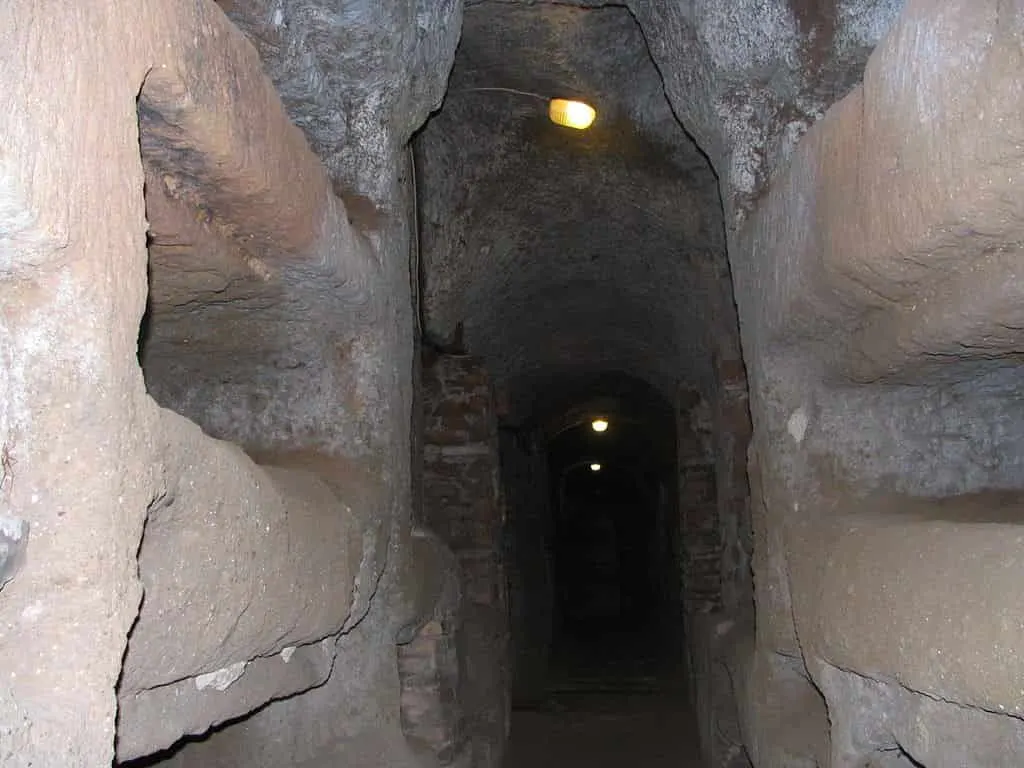
Going down into Rome's catacombs is an experience where adrenaline and adventure mix with curiosity and a touch of morbid fascination.
It's a walk through narrow, damp, dusty tunnels that will make you understand how fragile life was back then. You'll find niches where entire families rest, and others that show you just how high infant mortality was in those days.
There are plenty of reasons we could give you for visiting the catacombs, but the main one is that a large part of the history of Christianity is buried down there.
If you're brave, you'll see it firsthand. If not, no problem: settle for visiting the Colosseum while watching a documentary about the catacombs on YouTube.
Near the catacombs you'll find the Via Appia and the Baths of Caracalla, so if you plan your time well you can knock out three sights in one go, among the many Roman monuments waiting to be seen.
Which catacombs can you visit in Rome?
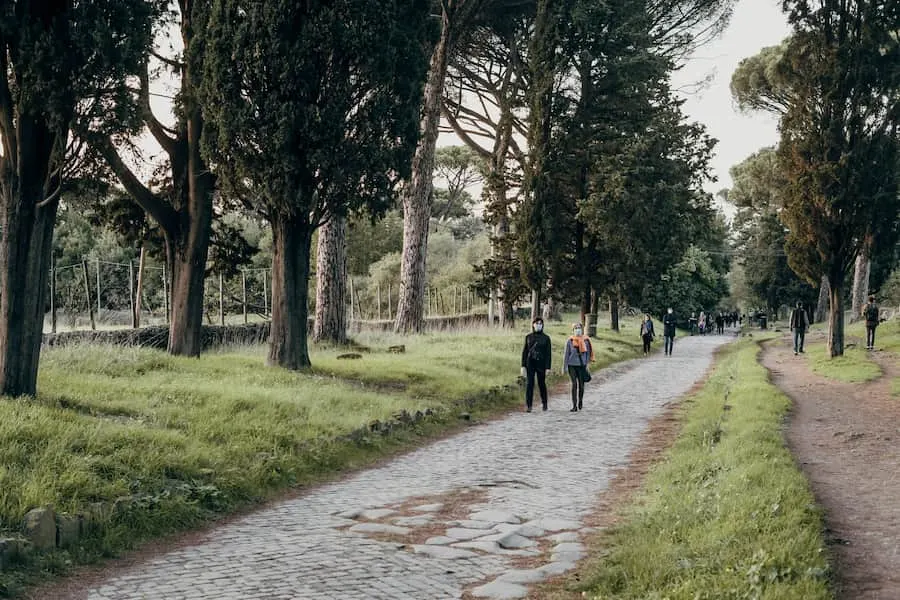
More than sixty catacombs are connected by a network of tunnels hundreds of kilometers long, but only five of them are open to the public. Find out which ones you can visit and how to reach the catacombs on Rome's public transport.
If you book the tour you won't have to worry, since it includes transport to and from the city of Rome. If you'd rather get there on your own, you first need to reach the Via Appia.
1. Catacombs of San Callisto
The Catacombs of San Callisto hold the remains of 16 popes as well as dozens of Christian martyrs. They consist of a network of galleries stretching more than 20 kilometers. These are among the most visited catacombs in Rome.
Hours: Thursday to Tuesday, 9:00 to 12:00 and 14:00 to 17:00
Address: Via Appia Antica, 126. You can get there on bus 118 or 218.
2. Catacombs of San Sebastiano
These catacombs were named in honor of St. Sebastian, a soldier martyred for daring to embrace the Christian faith. Twelve kilometers of labyrinthine tunnels make up these catacombs, which along with San Callisto are the most popular.
Hours: Monday to Saturday, 9:00 to 12:00 and 14:00 to 17:00
Address: Via Appia Antica, 136. You can get there on bus 118 or 218.
3. Catacombs of Priscilla
The Catacombs of Priscilla hold one of the art world's most treasured finds: the earliest frescoes depicting the Virgin Mary and the Annunciation. These catacombs are also the resting place of several popes and martyrs, including Priscilla herself and Crescentianus.
Hours: Tuesday to Sunday, 9:00 to 12:00 and 14:00 to 17:00
Address: Via Salaria, 430. You can get there on bus line 92
4. Catacombs of Domitilla
These catacombs run for more than 15 kilometers. They were discovered in 1953 and are named after the granddaughter of Vespasian, emperor of ancient Rome in the early Christian era.
Hours: Wednesday to Monday, 9:00 to 12:00 and 14:00 to 17:00
Address: Via delle Sette Chiese, 280. You can get there on bus lines 118, 218 and 714.
5. Catacombs of Sant'Agnese
The Catacombs of Sant'Agnese are inside the monumental complex of the Basilica of Sant'Agnese fuori le Mura, in the Quartiere Trieste. They take their name from St. Agnes, who was martyred and buried on the site.
Hours: Wednesday to Monday, 9:00 to 12:00 and 14:00 to 16:00. Closed Sunday morning and Monday afternoon.
Address: Via Nomentana, 349. You can get there on bus line 82.
You can fit the catacombs, the Via Appia and the Baths of Caracalla into a single day.
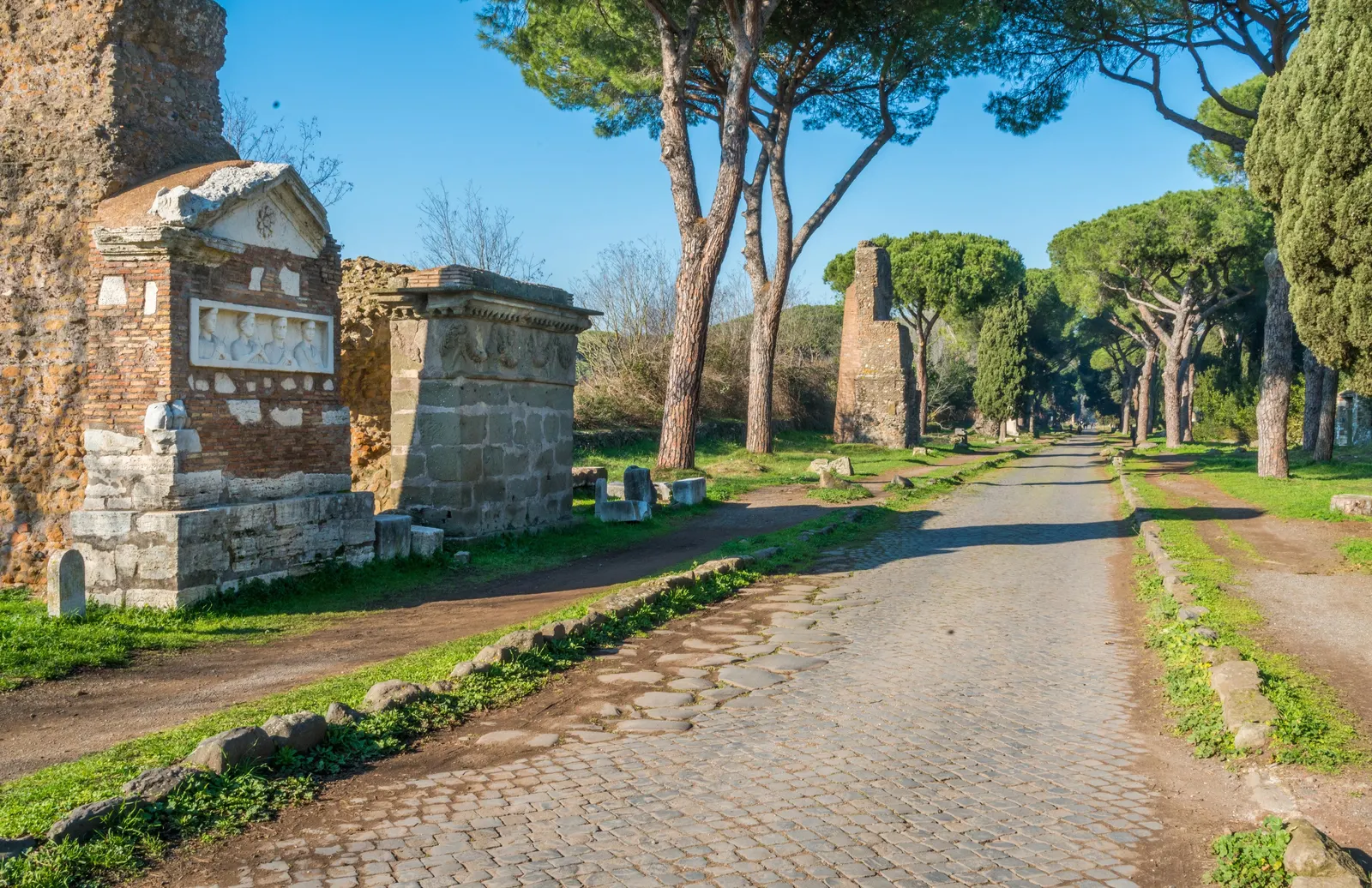
Visiting the catacombs of Rome
To get to know the history and all the secrets hidden in the Roman catacombs, we recommend joining a tour. It includes a visit to the Catacombs of San Callisto or San Sebastiano (depending on the day of the week), a walk along the Via Appia, and entry to the basilicas of St. John Lateran and Santa Maria Maggiore.
You can only visit Rome's catacombs with a guide, so you'll need to book a tour to see them. Book here and save yourself any last-minute hassle.
Prices
- Adults: €39
- Children 6-12: €32
- Children under 6 are not allowed into the catacombs.
If you'd rather skip the tour, remember you can also buy the ticket with guided visit to the Catacombs of San Callisto. And if you have Go City's Roma Pass, you can take the guided visit to the Catacombs of Rome for free, with round-trip transfer included.