
Herculaneum: What to See, Prices and Getting There from Rome
Herculaneum: What to See, Prices and Getting There from Rome
Contenidos de esta página sobre Roma
- Skip-the-line entry to Herculaneum
- A brief history of Herculaneum
- What to see in Herculaneum
- House of the Black Hall
- House of the Beautiful Courtyard
- Thermal baths
- Villa of the Papyri
- House of the Deer
- Hall of the Augustals
- Fornici
- House of Neptune and Amphitrite
- Samnite House
- House of the Relief of Telephus
- Guided tour of Herculaneum
- Herculaneum prices and opening hours
- How to get to Herculaneum from Rome
- By train
- By car
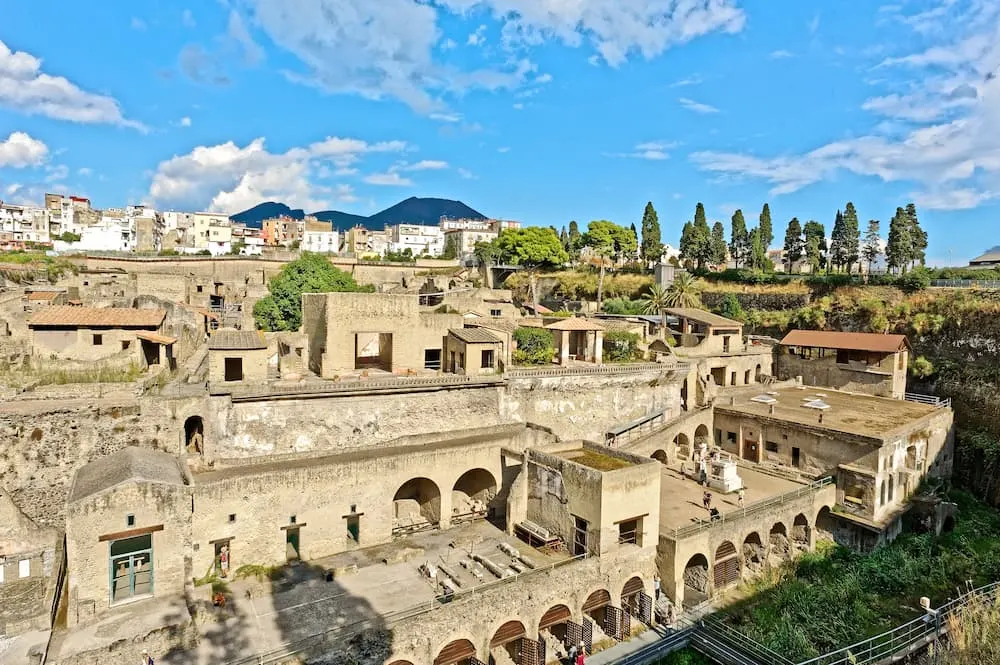
Herculaneum is an ancient Roman town in the Campania region, 11 kilometers from Naples. It's much smaller than its neighbor Pompeii and, although less famous, it's better preserved, which makes the trip well worth it. UNESCO declared it a World Heritage Site in 1997.
Here's what to see in Herculaneum, how to get there and why it's one of the day trips from Rome you should make on a trip to Italy.
A brief history of Herculaneum

The histories of Pompeii and Herculaneum are intertwined. When Vesuvius erupted catastrophically in the year 79, many areas were buried under ash for centuries.
Herculaneum, which sits very close to the volcano, was violently wiped out 12 hours after Pompeii, and all its buildings were sealed under more than 20 meters of ash. Its remains were found during excavations in 1709.
That's why the ruins of Herculaneum survive almost intact, far more so than those of Pompeii, and in them you can see what Roman life was like back then, nearly 20 centuries later.
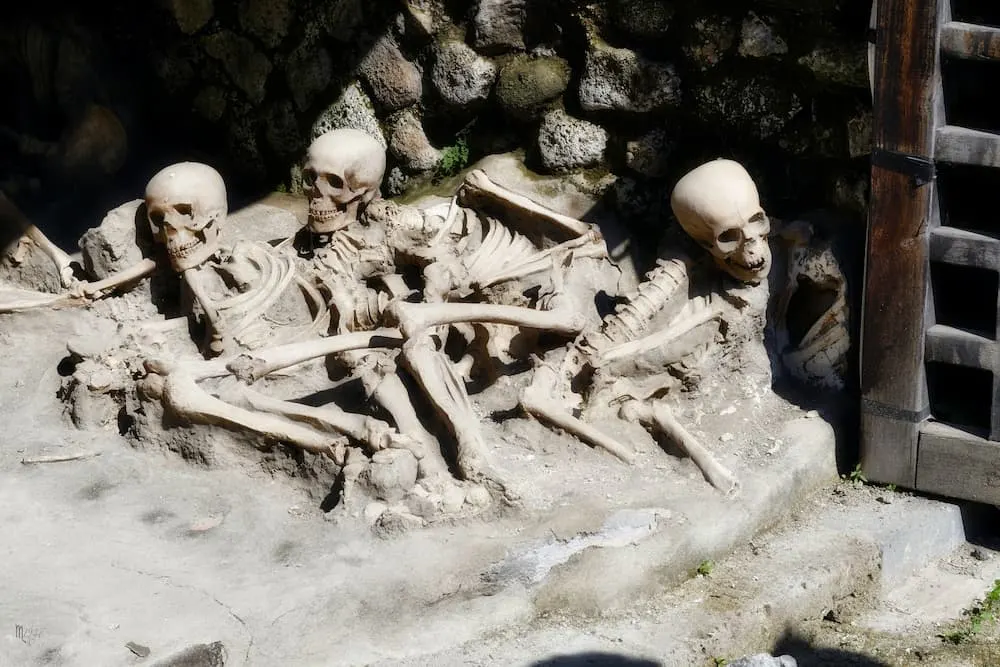
It was in Herculaneum that the first skeletons from the 1st century were found, and today you can see them in one of the town's houses.
You can take a guided tour of Vesuvius to get a close look at the lava left by its last eruption in 1944 and climb the slopes of the volcano that destroyed Herculaneum and Pompeii.
What to see in Herculaneum
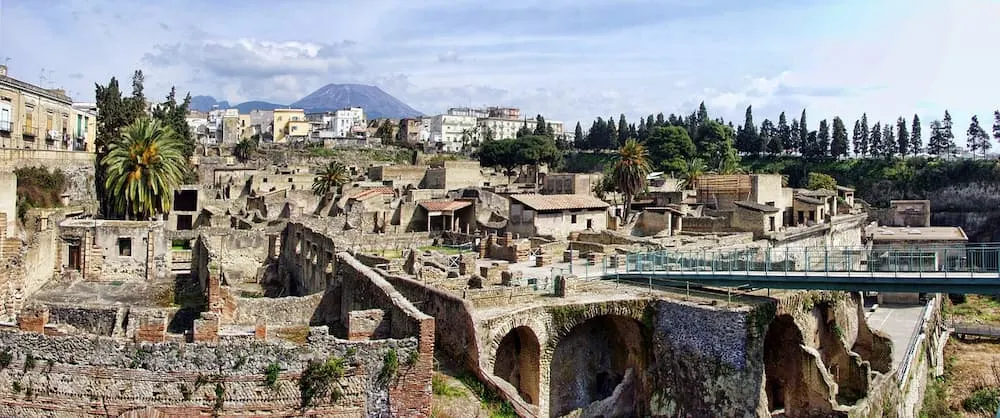
If you want to walk the villas and temples of Herculaneum without missing a thing, you can take a roughly two-hour guided tour in Spanish. But if you're going on your own, here are the essentials you'll see on a visit to Herculaneum, which you can cover in three or four hours at your own pace:
House of the Black Hall
This was one of the most striking and elegant houses in Herculaneum. It got its name because one of its rooms was covered entirely in black paintings.
House of the Beautiful Courtyard
Built in the 1st century AD, this building had a very large, handsome courtyard taking up most of the entrance area. The decoration, including paintings and murals, is still in place.
Thermal baths
They came to light in the 1931 excavations and have survived intact since they were built in the 1st century BC. You can make out the hot and cold rooms, the men's and women's sections and the changing rooms.
Villa of the Papyri
It takes its name from the papyri found during excavations in 1785, in the library inside this villa, which belonged to Lucius Calpurnius, father-in-law of the conqueror Julius Caesar. These texts from Herculaneum contain Greek philosophical ideas and are still completely legible.
House of the Deer
A sculpture of a deer stands in the courtyard of this equally luxurious house. It's notable for its view over the Gulf of Naples.
Hall of the Augustals
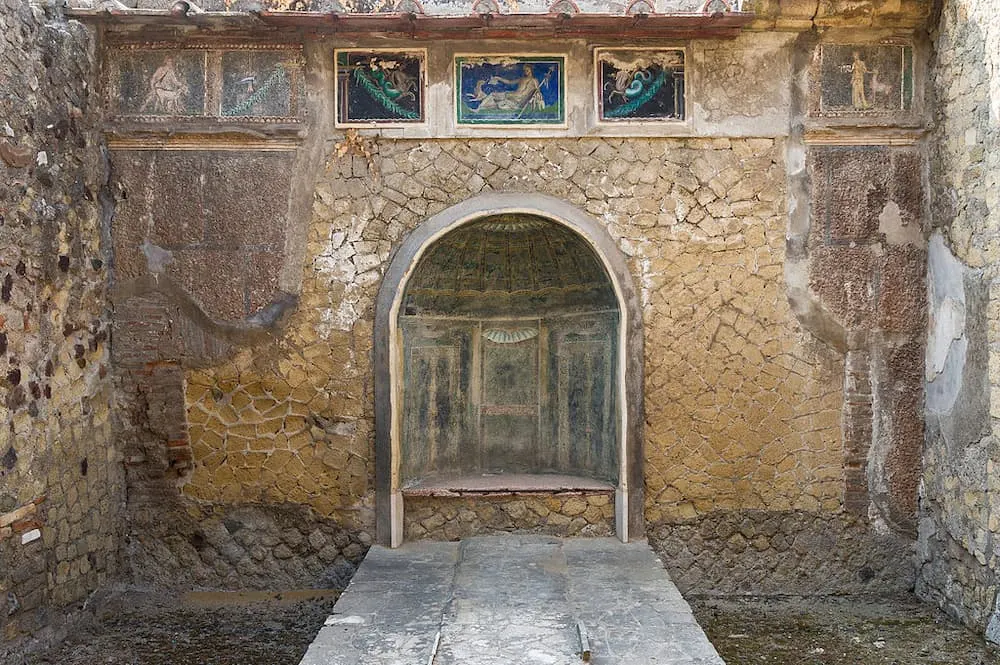
This hall was part of the College of the Augustals, where devotees of the emperor Augustus gathered. It's covered in paintings of Greek gods, and a skeleton was found on the main bed in the room.
Fornici
This was the name of the town's harbor warehouses and the place where more than 300 human skeletons were found in 1980. When Vesuvius began to erupt, many residents tried to escape this way, but their attempts were in vain.
House of Neptune and Amphitrite
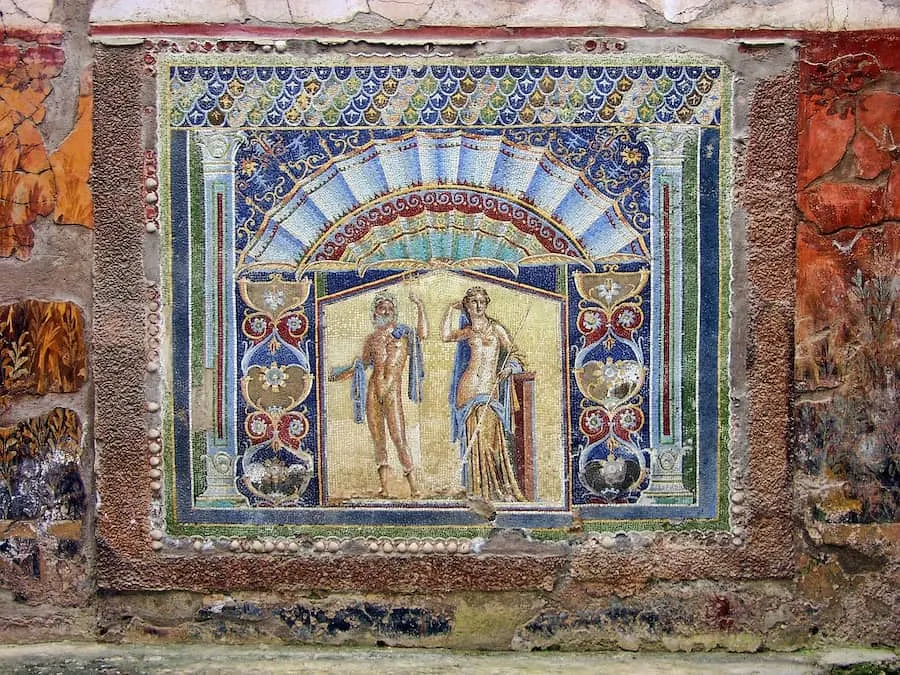
It's named after one of the house's mosaics, which shows Neptune, god of the sea, alongside his wife. It's one of the most decorated and colorful buildings in Herculaneum.
Samnite House
This is one of the oldest buildings in Herculaneum, with a Greek-style atrium and a small pool. Many objects were found during the excavations, among them a mutilated statuette of Venus.
House of the Relief of Telephus
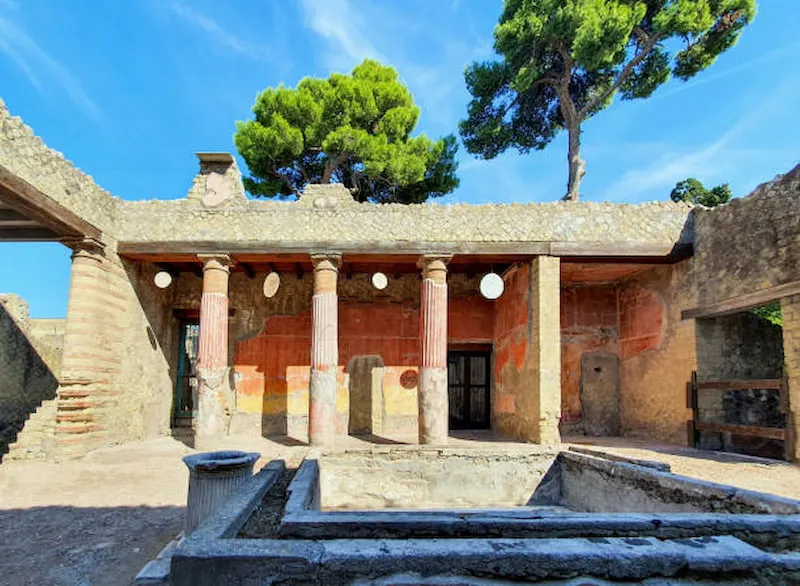
A three-story house dating from between 27 BC and 14 AD, decorated with plenty of sculptures. It stands out for its height and for honoring Telephus, son of Hercules, who is believed to have founded the town.
Herculaneum prices and opening hours
- You can skip the lines at Herculaneum by buying priority tickets for €17. There's also the option of an audio guide for the site for €8.
- EU citizens under 18 and over 65 get in free.
- EU citizens aged 18 to 25 pay €5 for a ticket.
- You can book a combined ticket for Pompeii and Herculaneum, taking advantage of how close they are and getting a fuller picture of these ancient Roman towns.
Herculaneum is open Monday to Sunday from 9:30 a.m. to 7:30 p.m. and closed on Wednesdays.
How to get to Herculaneum from Rome
These are the easiest ways to reach Herculaneum from Rome on your own:
By train
You can take the train from Rome to Naples from Roma Termini and, once there, look for the Circumvesuviana line to the Ercolano Scavi stop.
Depending on which train you take, a round-trip ticket can cost anywhere from €30 to €100, with a journey time of 2 to 3 hours.
By car
This is the cheapest option, and we recommend it if you've set aside more days for other recommended day trips from Rome, such as Ostia Antica, Hadrian's Villa and Pompeii.