
Ostia Antica: Rome’s Ancient Port You Can See in a Day
Ostia Antica: Rome’s Ancient Port You Can See in a Day
Contenidos de esta página sobre Roma
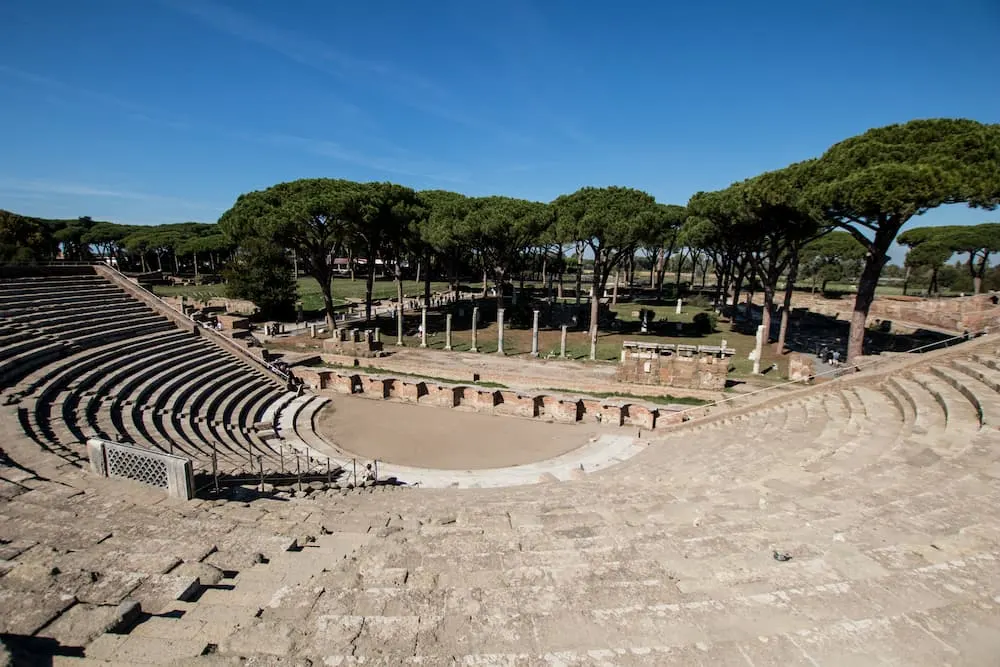
Ostia Antica is one of the best day trips from Rome. It's only 30 km from the city center, and its gripping history makes this archaeological park one of the most interesting places near Rome.
Read on for everything you need to know about the site of Ostia Antica, its history and how to visit.
A brief history
The story goes that Ostia Antica was founded by Ancus Marcius, king of Rome in the 7th century BC. It sat in a strategic spot at the mouth of the Tiber, guarding the way into Rome.
Its port made trade with Rome easy, and that's why it became one of the most prosperous Roman cities. It began a slow decline in the 4th century, worsened by repeated raids and invasions.
Ostia Antica once had more than 50,000 inhabitants. When it stopped being a good place to live, the city was abandoned altogether and buried under sand for almost ten centuries.
With a history this fascinating, it's one of the places around Rome we recommend if you have enough time while you're in the city.
What to see in Ostia Antica
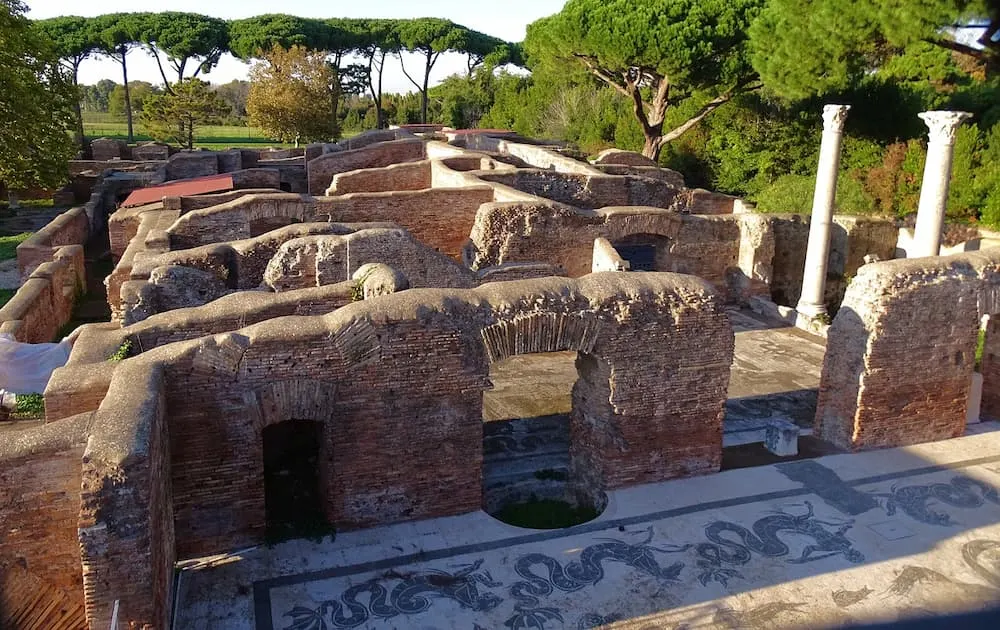
If you're visiting the ruins of Ostia Antica on your own, here are a few suggestions so you can walk through the city's most important buildings.
Decumanus Maximus
This was the commercial street and the main axis of the ancient city. It links the Porta Romana with the Porta Marina and opens the way to more streets, helping you understand how the city was laid out.
Business was done here, and you'll see the various buildings that rose around it: warehouses, baths and the theater.
The theater
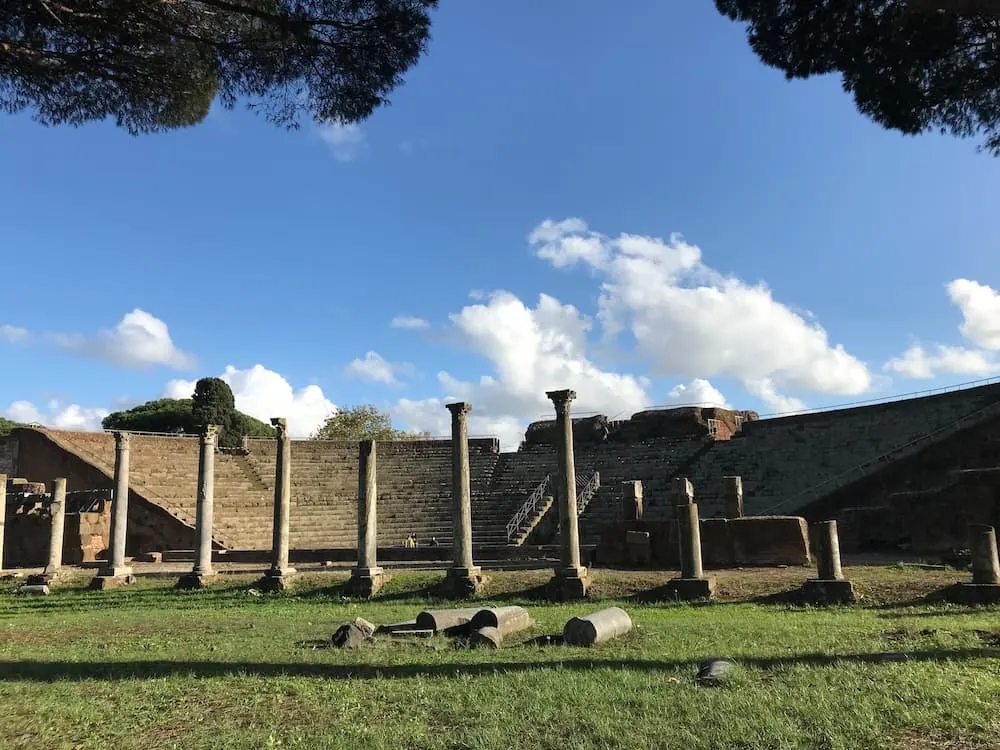
Commissioned by Agrippa, son-in-law of the emperor Augustus, at the end of the 1st century BC, the Roman theater of Ostia Antica is one of the best-preserved buildings on the site. It's thought to have hosted gladiator fights, and today it holds almost 3,000 people.
The baths
There were three bath complexes: the Baths of Neptune, the Porta Marina baths and the Forum baths. These were large complexes with hot and cold pools, gyms and saunas, commonly used for meetings or simply to relax.
Places of worship
Among the ruins are the remains of a synagogue, a Christian basilica and 18 temples honoring Mithras, the Persian god. One of them, the Capitolium, stood 20 meters tall. The variety of religious buildings reflected the need to serve a mixed community.
Is Ostia Antica worth visiting?
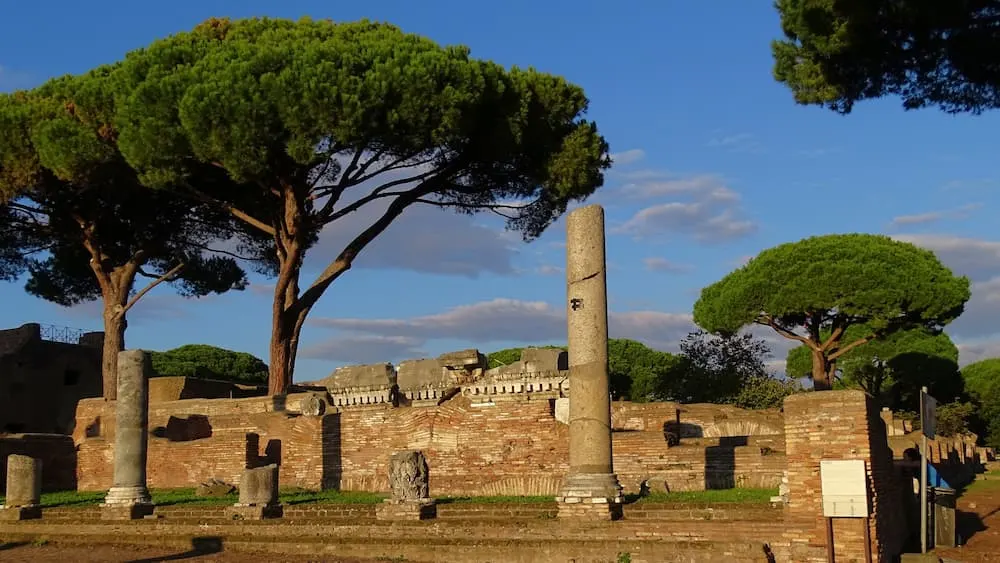
There are Roman cities that are far better preserved and much more visited, such as Pompeii or Herculaneum, but few people know that Ostia Antica was the first Roman colony and also the largest in the ancient world.
That alone makes the 30 kilometers between Rome and Ostia Antica worth covering. We recommend taking a guided tour so you don't miss a thing and can get a better grasp of the city's history.
How to get to Ostia Antica from Rome
The quickest way from Rome is to take metro line B from Roma Termini to Piramide, then hop on the Roma Lido suburban train. From there it's a ten-minute walk to the entrance of the site, and the fare is €6 round trip.
Here are a few practical details to help you plan your visit:
Prices
Tickets to Ostia Antica cost €18 for general admission and €2 for the reduced rate (EU citizens aged 18 to 25).
To save time and lock in your visit, you can also buy tickets to Ostia Antica in advance.
Opening hours
You can visit the ruins from Tuesday to Sunday, from 8.30 am to 4.30 pm (winter), to 6 pm (spring and fall) and to 7 pm (summer).
And if you're not sure which are the free days at Rome's museums, note that admission to Ostia Antica is free on the first Sunday of every month.
Finally, since you'll be visiting the Italian capital, take a look at the best free tours in Rome to get a feel for the city without spending much.
Another useful tip is to buy the Roma Pass Omnia card to get the most out of your tour of Rome and its most important monuments. It includes tickets to the Colosseum and tickets to the Vatican.